
What AI Job Search Really Means for You in 2026
AI is changing job search by automating the matching between candidates and roles, screening resumes before a human ever opens them, and generating tailored applications at a speed no person could match manually — shifting the real work from searching to tool selection and oversight.
That’s the short answer. Here’s what it actually looks like in practice, tool by tool.
This guide covers how AI touches matching, screening, applying, and interview prep. It does not cover salary negotiation or resume writing mechanics — those get their own treatment elsewhere.
Why This Is Happening Now, Not Just “AI Hype”
Skip the abstraction for a second. Job postings requiring AI fluency have risen nearly sevenfold in two years — faster than any other skill category tracked, according to McKinsey’s 2026 workforce data cited via Canditech’s hiring research. That’s not a marketing claim. It’s a hiring-demand signal, and it’s the reason recruiters now lean on AI tools of their own.
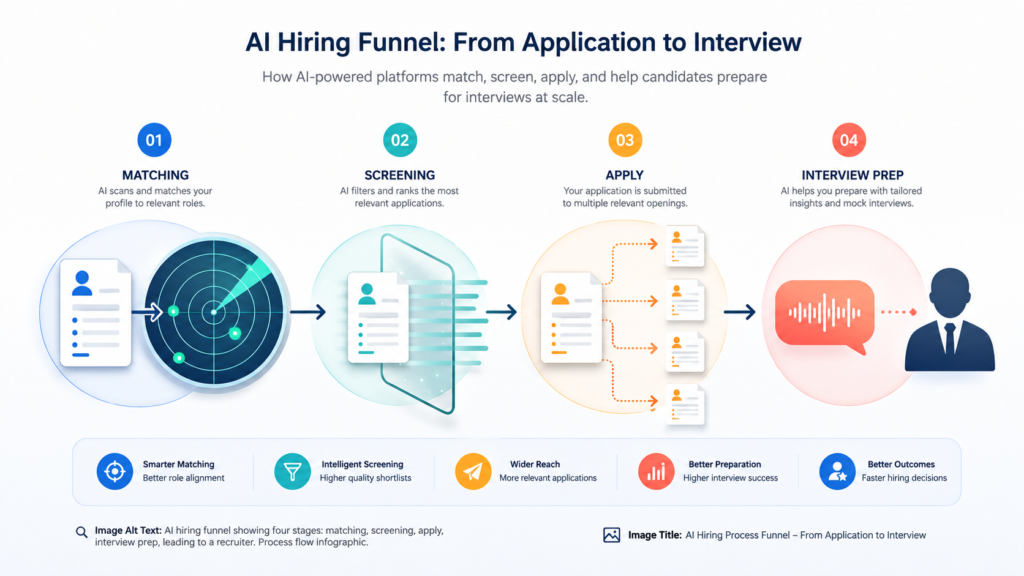
AI fluency itself has become a hiring signal. AI is reshaping job search across the full funnel — matching platforms surface roles, screening tools filter resumes before human review, and interview-prep tools simulate the loops candidates will actually face. The shift means job seekers now manage a stack of AI tools rather than relying on a single job board, mirroring how recruiters increasingly rely on AI-assisted screening themselves.
AI fluency is becoming a must-have skill. Explore McKinsey’s latest workforce data on the rapid rise of AI fluency
How AI Matching Platforms Score You Before a Human Looks
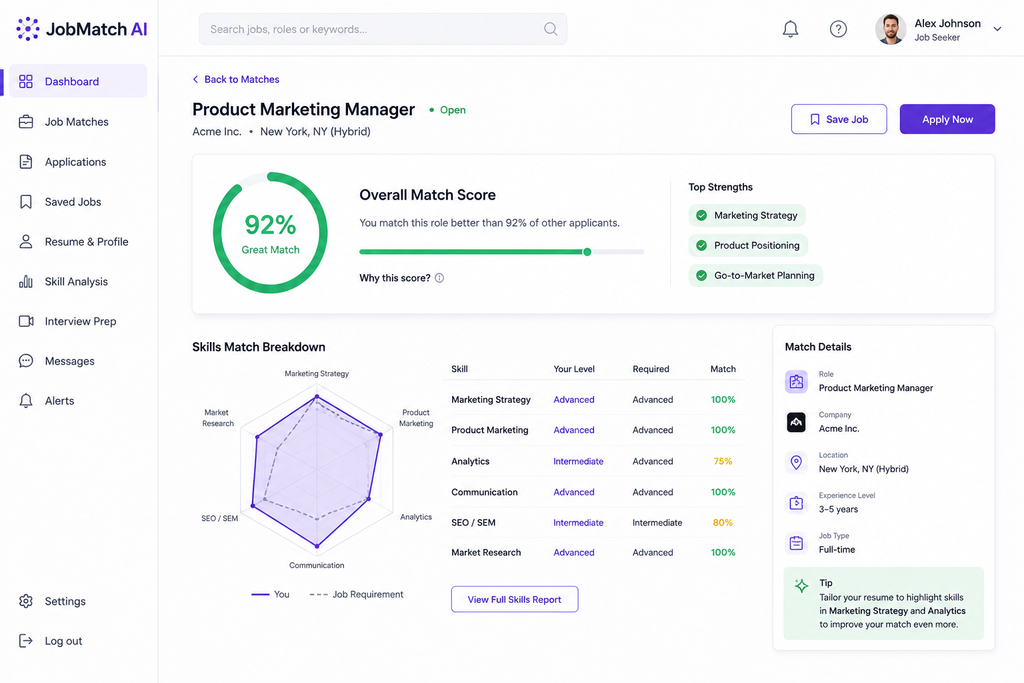
Here’s what most explainers skip: matching isn’t one algorithm. It’s a layered scoring system, and it starts working the moment you upload a resume.
Platforms like LinkedIn’s recommendation engine and enterprise tools such as Eightfold AI and SeekOut don’t just keyword-match. They build a skills graph from your history — inferred competencies, not just listed ones — and rank you against a role’s requirements before a recruiter ever searches. Readers in this situation typically report being surprised that a job they never actively applied to landed in their recommended feed. That’s the matching layer doing its job quietly in the background.
What most guides skip is this: the score you get isn’t fixed. It updates as you add skills, complete assessments, or even engage with certain content on the platform. The best AI job search tools to try first are the ones that let you see or influence that score directly, rather than guessing at a black box.
Learn more about the best AI job search tools to try first
Resume Screening: What Happens Before a Human Reviews It
Yes. Recruiters really do use AI to screen resumes, and it happens earlier in the process than most job seekers assume.
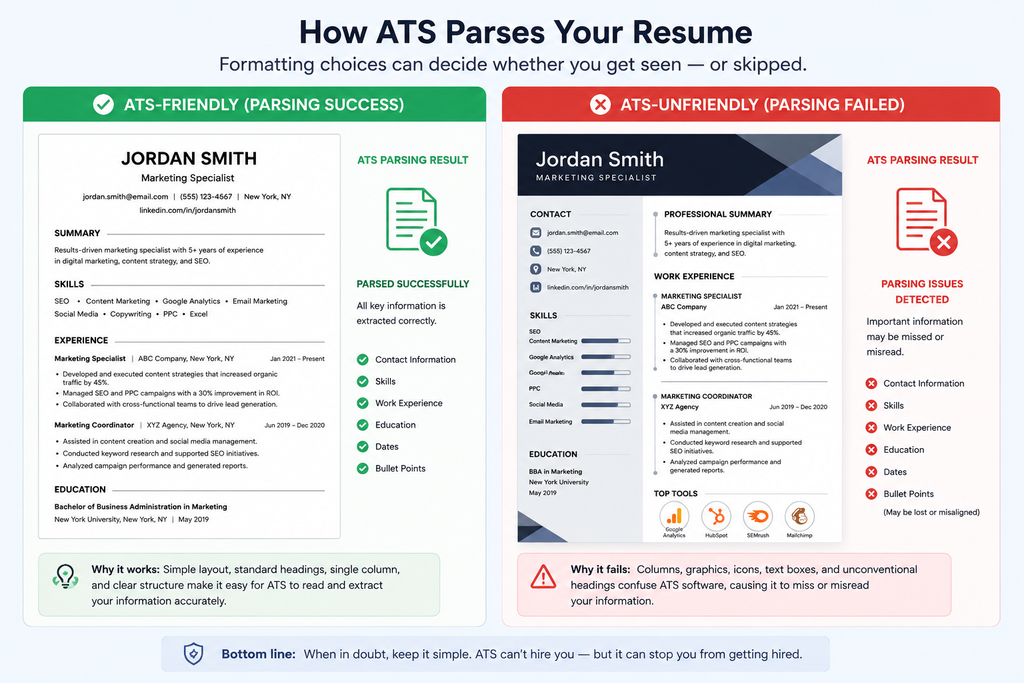
Applicant tracking systems like Workday and iCIMS have layered AI screening on top of older keyword filters. HireVue goes further, using AI to analyze video interview responses before a hiring manager watches the tape. How ATS scanning actually works matters here, because it determines whether your resume’s formatting — tables, headers, graphics — helps or quietly breaks the parse.
I’ve seen conflicting data on this one — some sources claim ATS rejection rates are wildly overstated, others put resume-parsing failure rates in the double digits. The most defensible read is that formatting errors cause real losses, but “the ATS rejects you” is often a stand-in for a resume that’s simply weak on relevant keywords and structure, not a system malfunction.
Underqualified applications still make it past screening sometimes. That’s a gap, not a design flaw.
Read our complete guide to how ATS scanning actually works
Common mistakes at this stage: dense two-column layouts that confuse older parsers, skills buried in a graphic instead of text, and job titles that don’t match how the role is actually searched internally. Fixing these is <u>low-effort, high-payoff work</u> — usually a rewrite, not a full resume overhaul.
Auto-Apply Tools: Automation at Scale, With Tradeoffs
This is where the shift gets uncomfortable for some people, and honestly, that reaction makes sense.
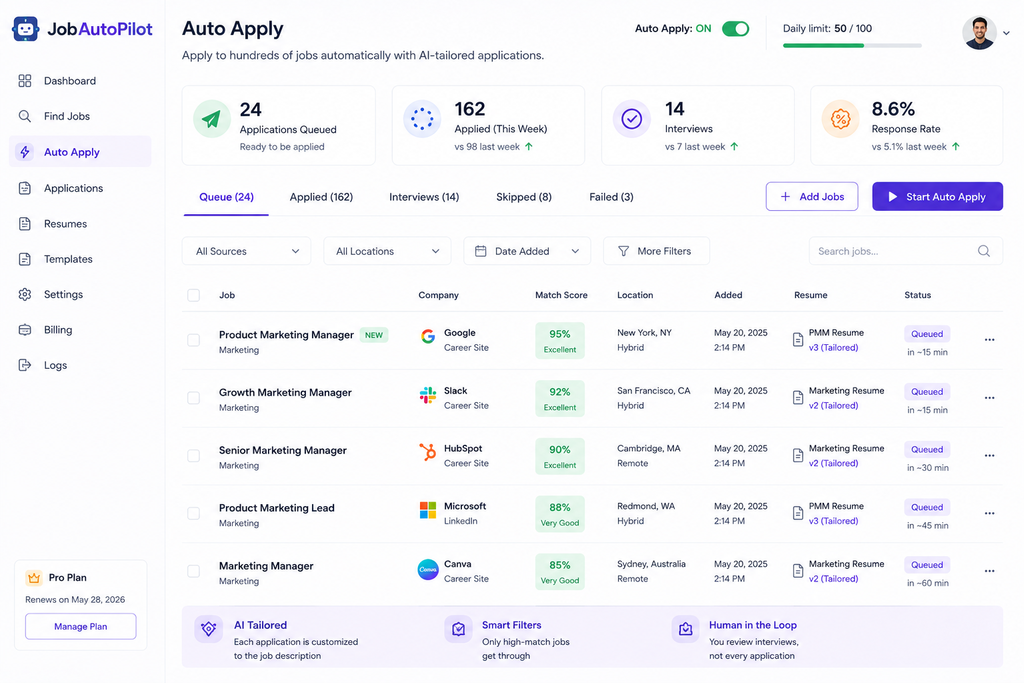
Tools like LazyApply, Sonara, and Simplify’s Copilot now submit tailored applications across dozens of postings automatically, adjusting resume phrasing per listing without a person typing a word. It’s fast. It’s also, in my view, a mixed bag — volume-based auto-apply tends to work better for high-turnover roles than for senior or niche positions, where a recruiter can tell an application was mass-generated. You might disagree, and that’s a fair pushback if you’ve landed a senior role this way.
Application tracking tools such as Teal HQ or Huntr have grown alongside auto-apply, mostly because job seekers now need to manage a volume of applications no person could track by memory.
Manual Search vs. AI-Assisted Search: Where Each Still Wins
Manual job search works better for highly targeted searches, because relationship-driven roles — the ones filled through a warm intro or a former colleague — rarely surface well through automated matching. AI-assisted search is stronger for high-volume applications across many similar roles. The key difference comes down to personal networking depth versus applied scale.
Quick Comparison
| Option | Best For | Key Benefit | Limitation |
| Manual search | Senior, relationship-driven, or niche roles | Personal context a recruiter can’t get from a resume | Slow, doesn’t scale past a handful of applications |
| AI matching platforms | Broad role discovery | Surfaces roles you wouldn’t have found manually | Score logic is often opaque |
| Auto-apply tools | High-volume, similar roles | Applies at a scale a person can’t match | Generic phrasing can hurt niche or senior roles |
| AI interview prep | Practicing real question loops | Simulates the actual format used by employers | Doesn’t replace live interview nerves |
Readers who <u>compare AI job search tools</u> side by side before committing tend to avoid paying for three overlapping subscriptions — a mistake that’s more common than it should be.
Explore our guide to compare AI job search tools and find the best options for your specific job-search needs.
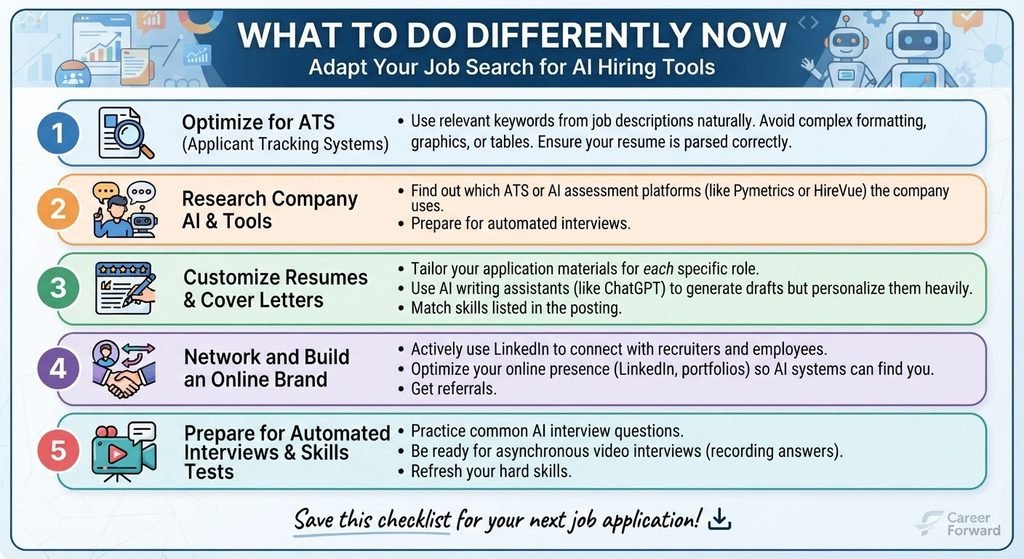
What to Do Differently Now
To adapt your job search to how AI actually works right now, follow these steps:
- Matching platforms score fit automatically — keep your skills profile current, not just your resume.
- Resume screening happens before human review — format for parsing, not visual flair.
- Auto-apply tools submit tailored applications at scale — use them for volume roles, not your top three target companies.
- Interview prep tools simulate real question loops — tools like Yoodli or Final Round AI mimic actual formats.
- Career tools recommend paths based on skills data — check what a tool infers about you, and correct it if it’s wrong.
Common Questions
Q: How has AI changed job searching?
A: It automated matching, resume screening, and even application submission, shifting effort toward tool selection rather than manual searching.
Q: Do recruiters really use AI to screen resumes?
A: Yes, widely — most large employers use some form of automated screening before a human reviews an application.
Q: Is AI job search a fad or a lasting shift?
A: Demand for AI fluency as a job skill has grown sharply, suggesting this is a structural shift rather than a temporary trend.
Q: What should job seekers do differently because of AI hiring?
A: Build a small stack of complementary AI tools — matching, tracking, and interview prep — rather than relying on one platform.
Q: Will AI replace recruiters entirely?
A: Current evidence points to AI handling screening and matching, while human recruiters still manage relationship-driven and senior-level hiring.
The Honest Takeaway
None of this means you need five subscriptions and a spreadsheet to track them. It means understanding which stage of the funnel — matching, screening, applying, interviewing — each tool actually helps with, and picking one per stage instead of stacking three that do the same thing.
You’re not competing against the algorithm. You’re competing against other candidates who’ve figured out how to work with it.
This works best if you’re actively applying across multiple roles right now. It won’t apply if you’re pursuing a single, highly specific referral-based opportunity — in that case, the human relationship still matters more than any tool on this list.



Comments
0 comments