1. Introduction
The security of international waterways has become one of the most important issues in contemporary geopolitics. As international commerce increasingly depends on interconnected maritime networks, the stability of strategic sea routes has a direct influence on economic growth, energy supplies, food security and international political relations. Among these waterways, the Red Sea occupies an exceptionally important position because it connects the Mediterranean Sea with the Indian Ocean through the Suez Canal and the Bab el-Mandeb Strait.
For centuries, the Red Sea has served as a bridge between Europe, Asia and Africa. In the modern global economy, it functions as a major corridor for container ships, oil tankers, bulk carriers and other commercial vessels transporting manufactured products, agricultural commodities, industrial materials and energy resources. Any prolonged disruption in this region can therefore affect businesses and consumers far beyond the Middle East.
The maritime security crisis that intensified in late 2023 demonstrated how quickly a regional conflict can become a global economic problem. Attacks on commercial vessels associated with the Houthi movement in Yemen prompted many shipping companies to reconsider their use of the Red Sea and Suez Canal. Some operators diverted their ships around the Cape of Good Hope at the southern tip of Africa, increasing journey times, fuel consumption, freight costs and delivery uncertainty.
The United Nations Conference on Trade and Development (UNCTAD) warned in 2024 that disruptions affecting major shipping routes were threatening global trade and adding pressure to already vulnerable supply chains. Its analysis highlighted the importance of maritime transport, which carries more than 80% of world trade by volume.

UN Trade and Development (UNCTAD)
+1
The situation remains a serious security concern. On 23 July 2026, the International Maritime Organization (IMO) condemned renewed attacks on international shipping, warning that such incidents endanger seafarers and threaten global supply chains. On 12 August 2026, the organization also condemned a deadly attack involving a cargo ship off the coast of Yemen.
International Maritime Organization
+1
These developments demonstrate that maritime security is not merely a naval or military issue. It is directly connected to economic stability, international law, regional diplomacy and the safety of civilian workers at sea.
The central argument of this article is that insecurity in the Red Sea threatens global trade by exposing the vulnerability of strategic maritime chokepoints, increasing transportation costs, weakening supply-chain reliability and raising the risk of wider regional confrontation. Addressing this challenge requires coordinated maritime protection, diplomatic engagement, respect for international law and long-term investment in resilient trade networks.
2. Understanding the strategic importance of the Red Sea
The Red Sea is a narrow body of water situated between northeastern Africa and the Arabian Peninsula. It connects to the Gulf of Aden through the Bab el-Mandeb Strait in the south and to the Mediterranean Sea through the Suez Canal in the north.
Its geographical position makes it one of the most strategically significant maritime corridors in the world. Ships travelling between Europe and Asia can use the Red Sea and Suez Canal to avoid the much longer route around southern Africa.
The countries surrounding the Red Sea include Egypt, Sudan, Eritrea, Djibouti, Saudi Arabia, Yemen and Jordan, which has access through the Gulf of Aqaba. Their economic interests, security concerns and diplomatic relationships influence the stability of the wider region.
The Red Sea’s importance can be understood through three geographical features.
2.1 The Suez Canal
The Suez Canal runs through Egypt and links the Mediterranean Sea with the Red Sea. It offers an important alternative to the longer sea route around Africa, making it particularly valuable for trade between Asian manufacturing centres and European markets.
The canal is important for containerised goods, energy shipments and other commercial cargo. It also generates revenue for Egypt through transit fees, making maritime traffic a significant national economic interest.
When insecurity reduces the number of vessels using the canal, the consequences extend beyond shipping companies. Egypt may experience reduced canal revenue, while businesses elsewhere face longer routes and less predictable delivery schedules.
2.2 The Bab el-Mandeb Strait
The Bab el-Mandeb Strait connects the Red Sea with the Gulf of Aden and the wider Indian Ocean. It is a maritime chokepoint, meaning that a relatively narrow passage carries a large amount of traffic between wider bodies of water.
Its position near Yemen, Djibouti and Eritrea makes it especially sensitive to regional instability. Threats involving missiles, drones, explosive-laden boats or attempted vessel seizures can create serious risks for ships passing through the area.
The importance of Bab el-Mandeb is not limited to countries bordering it. Commercial vessels travelling between Asia and Europe depend on the security of the entire route.
2.3 The Gulf of Aden and the wider Indian Ocean
The Gulf of Aden provides access to the Red Sea from the Indian Ocean. It connects commercial shipping routes from South Asia and East Asia with the Suez Canal and Mediterranean markets.
Ports in the wider region also support trade, fuel supplies, transshipment and maritime services. Insecurity can therefore affect multiple parts of the maritime network rather than one isolated stretch of water.
These three geographical features form an interconnected system. A threat at one point can force shipping companies to reconsider their use of the entire corridor.
3. Why the Red Sea is vital to global trade
Modern international trade relies on predictable transportation. Manufacturers need raw materials to arrive on schedule, retailers need finished products before selling seasons, and energy importers require dependable fuel deliveries. Maritime shipping supports these activities by transporting enormous quantities of goods across continents.
The Red Sea is especially important because it offers a relatively direct connection between Asian production centres and European consumer markets.
3.1 Connecting Asia and Europe
Many goods produced in China, India, South Korea, Japan and other Asian economies are exported to European markets. Depending on their origin and destination, these shipments may pass through the Indian Ocean, Bab el-Mandeb, the Red Sea and the Suez Canal.
This route supports trade in electronics, machinery, clothing, household goods, industrial components and numerous other products.
When vessels can no longer use the corridor safely, shipping companies may reroute them around Africa. The longer journey can affect inventory planning, manufacturing schedules and retail availability.
For businesses operating with limited storage capacity, even a delay of several days may create operational difficulties.
3.2 Supporting energy transportation
The wider Red Sea region forms part of the maritime network through which oil and petroleum products move between producing and consuming markets. Certain routes also carry liquefied natural gas and other energy-related cargoes.
The precise volume of energy passing through the corridor changes with market conditions, vessel movements and security developments. Nevertheless, disruptions can affect freight rates, delivery schedules and perceptions of supply risk.
Energy importers must therefore consider maritime security when planning purchases, maintaining reserves and evaluating alternative suppliers.
3.3 Facilitating international manufacturing
Global manufacturing depends on complex supply chains. A product assembled in Europe, for example, may require electronic components manufactured in East Asia, machinery parts from another country and raw materials sourced from several regions.
If shipping routes become unreliable, the effect can spread through the entire production process.
A delayed shipment of a relatively inexpensive component may prevent a factory from completing a much more valuable product. Companies may respond by holding additional inventory, paying for alternative transportation or temporarily reducing production.
The Red Sea crisis illustrates how the security of a maritime corridor can influence industrial performance thousands of kilometres away.
3.4 Linking maritime security with economic security
Economic security involves protecting the systems that enable countries to maintain production, employment, trade and access to essential goods.
Maritime security is a central part of this broader concept because international commerce depends heavily on safe navigation.
A country may possess substantial manufacturing capacity but still experience shortages if its imports cannot reach its ports. Similarly, an exporter may lose customers if its deliveries become too expensive or unpredictable.
Consequently, the Red Sea crisis should be understood as both a regional security challenge and a test of the resilience of the global economic system.
For related analysis, readers can explore the changing balance of global power in a multipolar world, which provides wider context for understanding how international competition influences trade routes and strategic relationships.
4. The roots of the Red Sea maritime security crisis
The present crisis did not emerge in isolation. It developed within a wider regional environment characterised by the Yemen conflict, tensions involving Israel and armed groups in the region, international military operations and longstanding disagreements over regional influence.
Understanding these overlapping factors is essential to explaining why commercial shipping became vulnerable.
4.1 The Yemen conflict
Yemen has experienced prolonged political instability and armed conflict involving the internationally recognised government, the Houthi movement and several regional and domestic actors.
The Houthis, also known as Ansar Allah, emerged as a powerful armed and political movement and established control over significant parts of Yemen, including the capital, Sana’a.
The conflict has had severe humanitarian consequences and has drawn in outside powers at different stages. It has also contributed to the militarisation of Yemen’s coastal environment.
Because parts of Yemen overlook the Red Sea and Bab el-Mandeb, developments inside the country have direct implications for nearby maritime routes.
4.2 The Israel–Hamas war and regional escalation
The war that followed the Hamas-led attacks on Israel on 7 October 2023 intensified tensions throughout the Middle East.
The Houthis subsequently began attacking commercial and other vessels in the Red Sea, describing their actions as support for Palestinians and linking the campaign to the conflict in Gaza. The group has also announced restrictions and threats against shipping it associates with Israel and its supporters.
In practice, the risks have extended to international commercial navigation, including vessels whose connections to the stated targets have been disputed or unclear.
This has created a serious problem for shipping companies. A vessel’s commercial ownership, flag, operator, cargo and past port calls may involve several different countries, making it difficult to evaluate the risk based on a single association.
4.3 The internationalisation of a regional conflict
The maritime attacks triggered responses from external powers seeking to protect shipping and deter further attacks.
Military deployments, defensive interceptions, strikes against Houthi targets and diplomatic efforts have become part of the wider response. These actions demonstrate how a local conflict can draw international actors into a wider security confrontation.
At the same time, military intervention introduces difficult questions about escalation, proportionality, effectiveness and the long-term political settlement in Yemen.
Protecting shipping is an immediate priority, but military action alone cannot resolve every underlying cause of insecurity.
4.4 The persistence of maritime risk
The crisis has continued to require international attention. The IMO’s Red Sea incident reporting documents attacks affecting merchant vessels and reflects the continuing importance of monitoring maritime security developments. Its published information records 61 confirmed incidents reported since 10 January 2024 in the reporting category presented on its Red Sea information page, in addition to earlier incidents recorded from November 2023 to January 2024.
International Maritime Organization
These figures should be interpreted according to the IMO’s reporting definitions and reporting periods; they should not be treated as a complete measure of every security incident in the wider region.
The key point is that the threat cannot be assessed solely by looking at whether a particular shipping lane is open. Operators must also consider the possibility of renewed attacks, the reliability of security information and the consequences of a vessel being damaged or detained.
5. Houthi attacks and the threat to commercial shipping
The Houthi campaign has demonstrated how relatively inexpensive weapons and asymmetric tactics can threaten a maritime corridor used by much larger commercial vessels.
Asymmetric warfare occurs when an actor uses methods that exploit an opponent’s vulnerabilities rather than matching its conventional military strength directly.
Commercial shipping is particularly vulnerable because merchant vessels are designed primarily for transporting cargo, not defending themselves against armed attacks.
5.1 Missiles and unmanned aerial vehicles
Missiles and unmanned aerial vehicles, commonly called drones, have featured in attacks and attempted attacks affecting the Red Sea region.
Such weapons can threaten vessels, crews and nearby maritime infrastructure. Their use also creates uncertainty for ship operators, who may have limited ability to determine whether a particular vessel is likely to be targeted.
Even when a threat is intercepted, a vessel may experience delays, emergency manoeuvres or a precautionary diversion.
Naval forces may be able to defend against some incoming threats, but the availability of defensive systems does not guarantee that every commercial vessel can be protected in every circumstance.
5.2 Attempts to seize or board vessels
The seizure of a commercial vessel can create a crisis involving crew safety, diplomatic negotiations, legal disputes and potential ransom or political demands.
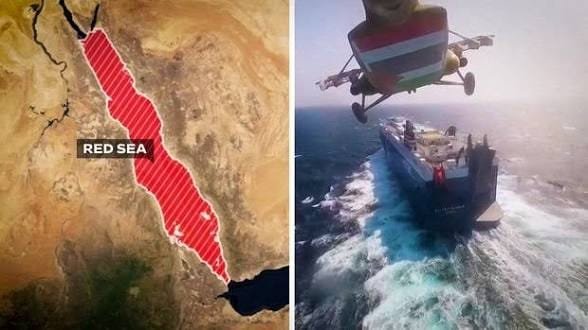
A widely reported example was the seizure of the Galaxy Leader in November 2023. The incident demonstrated how a merchant ship and its crew could become central to a wider political confrontation.
Vessel seizures also affect the confidence of shipping companies, insurers and seafarers. Companies must consider not only the financial value of a ship and its cargo but also the safety of everyone on board.
5.3 The danger to civilian seafarers
Seafarers are civilian workers who perform an essential role in maintaining international trade. They often spend months away from home, working on vessels that may carry goods required by entire economies.
When commercial ships are targeted, crew members may face death, injury, captivity and psychological distress.
The IMO has repeatedly emphasised the need to protect seafarers and ensure the release of those held captive. In its 12 August 2026 statement concerning the TIHAMAH, the organisation reported fatalities following a projectile strike off Yemen’s coast and renewed its call for operators to assess risks carefully.
International Maritime Organization
This human dimension must remain central to any discussion of maritime security. Trade statistics and freight prices are important, but they cannot capture the full cost of placing civilian lives at risk.
5.4 Why commercial vessels are difficult to protect completely
The maritime environment is large, geographically complex and constantly changing. Merchant ships move along extensive routes, operate under different national flags and may have different owners, charterers and operators.
Naval forces must also consider the possibility of multiple simultaneous threats, false alarms and rapidly changing intelligence.
Protecting every vessel requires coordination among shipowners, coastal states, naval forces, port authorities, intelligence organisations and international institutions.
The problem is therefore not simply whether a navy possesses advanced weapons. It is whether the broader maritime security system can detect threats, share reliable information and respond effectively while maintaining safe commercial navigation.
6. The Suez Canal and disruptions to global supply chains
The Suez Canal is one of the clearest examples of how insecurity in a narrow geographical passage can affect the global economy.
By connecting the Mediterranean and Red Seas, the canal shortens many shipping journeys between Asia and Europe. Its commercial importance means that reduced traffic can influence freight markets, port activity and national revenue.
6.1 Why shipping companies divert vessels
When the perceived risk of using a route becomes too high, a shipping company may decide to divert a vessel around the Cape of Good Hope.
This alternative avoids the Red Sea corridor but substantially lengthens many Asia–Europe voyages.
The decision involves several considerations:
- The likelihood and potential severity of an attack.
- War-risk insurance and other additional premiums.
- The extra fuel required for a longer journey.
- Vessel availability and the cost of delayed deliveries.
- Contractual obligations and customer expectations.
- The availability of alternative ports and transport connections.
A company may continue using the Suez Canal if it judges the risks manageable, while another may divert because its cargo, vessel or insurance arrangements create a different risk profile.
There is no single decision that applies to every operator.
6.2 The scale of disruption
UNCTAD’s February 2024 analysis reported a 42% decline in Suez Canal transits from their peak at that time, while weekly container ship transits had fallen by 67% in the period it examined. The organisation also documented sharp increases in freight rates on certain routes from Shanghai. These are historical measurements from the 2024 disruption, not current traffic figures for October 2026.
UN Trade and Development (UNCTAD)
+1
The data nevertheless illustrate the sensitivity of maritime trade to security shocks.
When a large number of ships divert simultaneously, the effects can include longer voyages, changes in vessel availability, schedule disruptions and higher operating expenses.
Even companies that do not directly use the Red Sea may be affected when ships are reassigned from other routes or global freight capacity becomes more constrained.
6.3 The Cape of Good Hope alternative
The Cape of Good Hope route is a practical alternative for many ships travelling between Asia and Europe, but it is not cost-free.
A longer journey generally requires more fuel and more time. Ships may arrive later than planned, increasing pressure on ports, warehouses, factories and distribution centres.
Shipping companies may also need additional vessels to maintain the same frequency of service. This can raise costs even if the volume of goods being transported remains unchanged.
For time-sensitive products, the longer route may affect production schedules or reduce the commercial value of a shipment.
6.4 The consequences for port operations
Shipping schedules are closely interconnected. A delayed vessel can arrive after its planned berth is available, miss a connecting service or create congestion at a later port.
Ports may need to reorganise labour, equipment and storage arrangements. Importers can face unexpected handling expenses, while exporters may struggle to secure space on alternative sailings.
These operational effects show that a maritime chokepoint is part of a larger logistics system rather than an isolated channel.
6.5 Why route diversification matters
The crisis has strengthened the case for diversifying transport routes and improving supply-chain flexibility.
However, diversification does not necessarily mean abandoning the Suez Canal. The canal remains an important commercial route, and the most efficient long-term approach is to preserve its safe use while preparing credible alternatives.
Businesses can reduce exposure by evaluating different ports, negotiating flexible shipping arrangements and avoiding excessive dependence on a single supplier or route.
Governments can support this process through infrastructure investment, customs modernisation and regional cooperation.
7. Economic consequences for international trade
The economic consequences of Red Sea insecurity extend beyond the immediate cost of a naval escort or an additional shipping day. They influence the interconnected processes through which goods are manufactured, transported, insured, distributed and sold.
7.1 Higher freight costs
When shipping companies face longer routes or increased risk, they may introduce surcharges or adjust freight prices.
The actual cost depends on the route, cargo type, vessel, insurance arrangements, contract terms and market conditions. Some costs are passed on to customers, while others are absorbed temporarily by shipping companies or importers.
If the disruption continues, businesses may incorporate the additional expense into product prices.
7.2 Rising insurance premiums
Marine insurance protects shipowners and cargo interests against specified risks. When a route becomes more dangerous, insurers may reassess coverage and charge additional war-risk premiums.
These charges can make some voyages substantially more expensive, particularly when a vessel is considered exposed to a heightened threat.
Insurance is not merely an administrative issue. It influences whether a voyage remains commercially viable.
A shipowner may possess the technical ability to use a route but decide that the combined security and financial risks are unacceptable.
7.3 Delays and inventory shortages
Many businesses use just-in-time inventory systems, under which materials arrive shortly before they are needed in production.
Such systems can reduce storage expenses, but they depend on reliable transportation. Unexpected delays may leave factories without essential components and retailers without popular products.
Companies can respond by holding larger inventories, diversifying suppliers or paying for faster alternative transport.
Each option involves costs. Maintaining extra stock ties up capital, while changing suppliers may require quality checks and new contracts.
7.4 Inflationary pressure
Higher shipping costs can contribute to inflation when businesses pass increased transportation and insurance expenses on to customers.
The relationship is not automatic. The final effect depends on how long the disruption lasts, the proportion of transportation in a product’s total cost, exchange rates, demand, competition and the ability of businesses to absorb expenses.
Nevertheless, prolonged disruption can place upward pressure on prices, particularly for goods travelling long distances.
This is especially significant when transport shocks occur alongside other economic pressures, such as energy-price volatility or supply shortages.
7.5 Small businesses face disproportionate challenges
Large multinational companies often have greater bargaining power, more extensive supplier networks and better access to alternative logistics arrangements.
Smaller importers may have fewer options. They may lack the financial capacity to absorb additional charges or purchase extra inventory.
A small business that imports electronic accessories, clothing, machinery parts or household products may face higher landed costs without being able to negotiate favourable freight rates.
The resulting price increases can reduce competitiveness and weaken cash flow.
7.6 Uncertainty can be as damaging as cost
Businesses make investment and purchasing decisions based on expectations about future delivery times and expenses.
When the security situation changes unpredictably, companies may postpone orders, delay investment or adopt more expensive contingency plans.
This uncertainty can influence commercial activity even when a particular shipment has not been directly affected.
The economic lesson is clear: dependable maritime security is valuable because it allows companies to plan with greater confidence.
8. Energy security and the global oil market
Energy security refers to the reliable availability of energy at affordable and sustainable prices. Maritime routes are central to this objective because oil, petroleum products and some forms of natural gas are transported internationally by sea.
The Red Sea’s connection to the Suez Canal and the wider Indian Ocean makes it relevant to energy trade between producing regions and consuming markets.
8.1 Oil transportation and market expectations
A threat to shipping can affect energy markets through both physical supply concerns and expectations about future disruption.
If traders anticipate that tankers will face longer journeys or higher insurance costs, freight expenses may rise. Buyers may also reconsider delivery schedules and the availability of alternative supplies.
The effect on crude oil prices is not determined by maritime insecurity alone. Global production, inventories, demand, sanctions, geopolitical developments and decisions by major producers also matter.
It is therefore inaccurate to assume that every Red Sea incident will automatically produce a major increase in oil prices.
8.2 The role of alternative routes
Some energy shipments can use alternative routes or sourcing arrangements, but these options vary by origin, destination, pipeline infrastructure and vessel availability.
Diversification can reduce dependence on a particular maritime corridor, although alternative routes may be longer or more expensive.
Countries can also improve energy resilience through strategic reserves, more flexible procurement contracts and stronger regional energy cooperation.
8.3 Consequences for importing economies
Countries that depend heavily on imported fuel may be vulnerable to changes in shipping costs and delivery schedules.
Higher import expenses can affect transport, electricity generation, manufacturing and public finances. The effect is especially important for economies already facing currency pressures or limited fiscal space.
For energy-importing countries, maritime security should therefore be part of a wider strategy that includes diversified suppliers, efficient energy use and prudent reserve management.
9. Humanitarian consequences and seafarer safety
The human consequences of maritime insecurity are among its most serious dimensions.
Commercial vessels carry crews who are often far from their home countries and have little control over the political decisions that create the threats they face.
9.1 Physical danger and psychological stress
A ship operating in a high-risk environment may face missile attacks, drone strikes, attempted boarding or other hostile activity.
Crew members may have to respond to alarms, take emergency shelter, assist injured colleagues or prepare to abandon a damaged vessel.
Even when no physical injury occurs, the possibility of an attack can create anxiety, fatigue and long-term psychological stress.
9.2 Families and communities
When seafarers are injured, killed or detained, their families experience immediate emotional and financial hardship.
Many maritime workers support relatives in countries where remittances contribute significantly to household income. A prolonged detention or interruption in employment may therefore affect entire families.
Ensuring crew welfare requires effective emergency response, access to communication, appropriate insurance and support for workers who experience traumatic incidents.
9.3 The importance of rescue and evacuation
Maritime safety systems depend on cooperation among nearby vessels, coastal authorities, rescue services and international organisations.
When a ship is attacked, rapid communication and coordinated rescue operations can save lives.
Shipping companies must maintain emergency procedures, ensure crews understand their responsibilities and provide appropriate safety equipment and training.
These measures cannot eliminate the threat, but they can reduce the consequences of an incident.
9.4 Protecting civilian workers under international law
Seafarers should not be treated as instruments of political pressure. Their civilian status and the protections applicable to them must remain central to maritime security policy.
The IMO has repeatedly called for the safety of crews, the release of detained seafarers and an end to attacks on commercial shipping. Its position reflects the principle that civilians performing essential commercial work should not be targeted in armed conflict.
International Maritime Organization
+1
Protecting the people who operate ships is therefore a moral obligation as well as a practical requirement for international commerce.
10. The role of regional and global powers
The Red Sea crisis involves a range of actors with different strategic interests. Some prioritise freedom of navigation, others focus on regional security, and others seek to use maritime pressure as leverage in wider political disputes.
Effective policy must recognise these competing interests without treating attacks on civilian shipping as acceptable.
10.1 The United States
The United States has played a major role in international maritime security efforts in the region, including naval deployments and operations intended to protect shipping.
Its interests include safeguarding commercial routes, supporting regional partners and deterring attacks against vessels.
However, military action also carries risks. Strikes against armed groups may provoke retaliation, widen the conflict or complicate diplomatic efforts.
A sustainable strategy must therefore combine immediate defensive measures with a broader approach to de-escalation.
10.2 European countries and the European Union
European economies depend on trade links with Asia, making the Red Sea important to their commercial interests.
The European Union established EUNAVFOR ASPIDES in February 2024 to contribute to freedom of navigation and maritime security. The operation’s mandate has included maritime situational awareness, accompanying vessels and protecting them against attacks within its area of operations.
EEAS
+1
Such missions demonstrate the role of multinational cooperation in protecting shipping.
Nevertheless, naval operations have operational limits. Their effectiveness depends on intelligence, resources, rules of engagement, coordination and the nature of the threats encountered.
10.3 Egypt
Egypt has a direct economic interest in the security of the Suez Canal because canal traffic generates important revenue and supports related economic activity.
A prolonged reduction in shipping can weaken canal receipts and place additional pressure on the Egyptian economy.
Egypt also has a strategic interest in preventing instability from spreading across the Red Sea region.
For Cairo, restoring confidence in the canal is therefore both an economic objective and a national security priority.
10.4 Saudi Arabia and other Gulf states
Saudi Arabia and other Gulf states have interests in maritime security, energy exports, port development and regional stability.
The Red Sea forms part of Saudi Arabia’s western maritime environment, while the wider region is connected to Gulf energy markets and international commercial networks.
Insecurity can threaten investment confidence and complicate economic diversification plans.
The involvement of regional states is important, but cooperation must account for their different relationships, security priorities and views on the Yemen conflict.
10.5 China
China is deeply connected to global maritime trade as a major manufacturing economy, exporter and importer of energy and raw materials.
Disruptions to shipping between Asia and Europe can affect Chinese companies, overseas markets and transport costs.
China also has an interest in protecting commercial vessels and maintaining access to international sea lanes.
Its diplomatic relationships and economic ties across the Middle East give it potential channels for engagement, although diplomatic influence does not automatically translate into the ability to prevent attacks.
10.6 Regional states and coastal communities
The countries bordering the Red Sea have direct responsibilities and interests in maritime safety, port security, coastal enforcement and regional cooperation.
Their capabilities differ, and some face substantial economic or political constraints.
International partnerships can support maritime monitoring, training, information exchange and institutional capacity-building.
However, regional governments should be treated as essential participants rather than passive locations in which external powers compete.
A durable maritime security framework must take local interests seriously and support cooperation that benefits the wider region.
11. International law and freedom of navigation
International maritime law provides the legal framework governing navigation, state responsibilities and the use of the sea.
The United Nations Convention on the Law of the Sea (UNCLOS) is a central component of this framework. It addresses issues including navigation rights, maritime zones and the responsibilities of states.
The legal analysis of any particular incident depends on the facts, the location, the status of the vessel, the applicable legal rules and the conduct of the parties involved.
11.1 Freedom of navigation
Freedom of navigation is essential to international commerce because ships must be able to move through lawful maritime routes without unlawful interference.
When commercial vessels are attacked or threatened, the consequences extend beyond the individual ship. The incident can undermine confidence in a route used by many countries.
Protecting lawful navigation is therefore a shared international interest.
11.2 United Nations Security Council action
The United Nations Security Council adopted Resolution 2722 on 10 January 2024, addressing Houthi attacks against merchant and commercial vessels in the Red Sea.
The resolution called for attacks to cease and addressed the importance of respecting navigational rights and freedoms. The IMO’s reporting framework also refers to subsequent Security Council resolutions concerning continued reporting on attacks.
International Maritime Organization
+1
These measures demonstrate that the crisis has been treated as an international security concern rather than solely a commercial dispute.
11.3 The limits of military enforcement
Naval operations may help defend ships, deter certain attacks and support the collection of maritime intelligence.
However, the use of force must be assessed under the applicable international legal framework. Questions about self-defence, the protection of civilians, proportionality and the legal basis for particular actions cannot be resolved through general claims alone.
Military measures also cannot replace the political arrangements needed to reduce the underlying conflict.
International law is most effective when states apply it consistently, support accountability and maintain credible diplomatic channels.
11.4 The need for consistent standards
The protection of maritime commerce should not depend on the nationality of a vessel, the identity of its crew or the political preferences of the state benefiting from the shipment.
A consistent approach helps maintain trust in international rules and reduces the risk that commercial shipping becomes a routine instrument of geopolitical coercion.
The long-term objective should be a maritime environment in which civilian vessels can operate under predictable rules and seafarers are protected from attacks.
12. Cybersecurity and emerging maritime threats
Modern shipping increasingly depends on digital systems. Navigation, cargo management, port operations, vessel tracking and logistics coordination all use information technology.
This dependence improves efficiency but creates additional vulnerabilities.
12.1 Digital navigation systems
Ships use satellite navigation, electronic charts and other digital systems to support safe movement.
Interference with navigation signals or the compromise of related systems can create confusion, delays and safety risks.
In a region already affected by military threats, unreliable navigation information can make it more difficult for operators to assess their surroundings.
12.2 Port and logistics networks
Ports rely on digital systems to manage cargo, schedule vessels, control access and coordinate customs procedures.
A cyberattack against a port operator, shipping company or logistics provider could interrupt cargo handling even if no ship is physically attacked.
Such disruptions may spread across multiple countries when companies depend on shared software or interconnected service providers.
12.3 False information and vessel tracking
Maritime operators use vessel-tracking information and other data to understand traffic patterns.
Inaccurate or manipulated information may complicate decisions about route selection, vessel identification and incident response.
Companies should therefore avoid relying on a single information source when making high-consequence safety decisions.
12.4 Strengthening cyber resilience
Maritime organisations can improve resilience through access controls, system updates, secure communications, backup procedures and staff training.
They should also establish incident-response plans that allow essential operations to continue when digital systems become unavailable.
Cybersecurity should be integrated into wider maritime risk management rather than treated as a separate technical concern.
The future of maritime security will depend on the ability to protect both physical vessels and the digital infrastructure that supports them.
13. Environmental consequences of shipping disruptions
The environmental effects of Red Sea insecurity receive less attention than military operations and freight prices, but they are important.
Longer routes can increase fuel consumption and greenhouse-gas emissions. Attacks on vessels can also create the risk of fires, oil spills, damaged cargo and pollution.
13.1 Increased emissions from longer journeys
When ships divert around the Cape of Good Hope, they may travel substantially farther than planned.
The environmental effect depends on vessel type, speed, engine efficiency, cargo load, weather conditions and the route taken.
Longer distances generally increase the fuel required for a voyage, although the precise increase varies between ships and operating conditions.
UNCTAD has highlighted the environmental implications of disrupted shipping routes and the additional emissions associated with rerouting.
UN Trade and Development (UNCTAD)
+1
13.2 The risk of marine pollution
An attack that damages a tanker or cargo vessel may lead to fuel leakage, chemical releases or other forms of marine pollution.
The consequences depend on the nature of the cargo, the location of the incident, the weather and the effectiveness of emergency response.
Pollution can damage marine habitats, threaten coastal livelihoods and impose costly cleanup responsibilities.
13.3 Effects on fisheries and coastal communities
Communities around the Red Sea depend on fishing, tourism, transport and other marine activities.
Security incidents and pollution can affect these livelihoods by disrupting access to coastal waters or damaging the marine environment.
Environmental protection should therefore form part of regional maritime planning.
13.4 Combining security with sustainability
Maritime security and environmental sustainability should be treated as complementary goals.
Safer navigation reduces the risk of attacks and accidents, while better route planning and efficient vessel operations can reduce fuel consumption.
Regional cooperation on pollution response, environmental monitoring and emergency preparedness can also improve resilience.
The broader lesson is that the costs of maritime insecurity are not confined to trade accounts. They can also affect ecosystems and communities for years.
14. Implications for developing countries and Pakistan
The effects of Red Sea insecurity are not evenly distributed. Countries with strong financial resources, diversified suppliers and extensive logistics networks may be better positioned to absorb disruption than economies with limited fiscal space.
Developing countries often face additional challenges because they depend on imported fuel, machinery, fertilisers, medicines and manufactured goods.
14.1 The impact on import costs
If shipping costs increase, importers may face higher expenses for goods transported through affected routes or through wider freight markets.
The effect on any individual country depends on its trade composition, contracts, exchange rate, alternative suppliers and the extent to which its cargoes use the affected corridor.
Some businesses may absorb higher costs, while others may increase prices or reduce orders.
14.2 Pakistan’s exposure to global shipping conditions
Pakistan participates in international maritime trade through its seaports and depends on shipping for a wide range of imports and exports.
The country imports energy and industrial inputs and exports products such as textiles, agricultural goods and manufactured items. Its precise exposure to Red Sea disruptions varies by destination market, shipping line, cargo and route.
For exporters serving European markets, longer transit times can complicate delivery schedules and customer commitments when vessels are diverted around Africa.
Importers may also experience changes in freight charges and shipping availability, although the scale of the impact must be assessed using current route-specific data rather than assumed for every shipment.
14.3 Effects on small exporters
Small and medium-sized enterprises may have fewer options when a shipping schedule changes unexpectedly.
A textile exporter, for example, may have to negotiate a revised delivery date or pay for additional logistics services. A small importer may be unable to secure the same freight terms as a larger company.
These pressures can weaken competitiveness and make it harder to maintain long-term commercial relationships.
14.4 Policy priorities for Pakistan
Pakistan can strengthen its resilience by improving several areas of trade planning.
First, exporters and importers should monitor shipping advisories and communicate with freight forwarders before confirming delivery schedules.
Second, businesses should assess whether alternative routes, ports or suppliers are commercially viable for their particular products.
Third, policymakers can support exporters through improved trade facilitation, efficient port operations, digital customs procedures and stronger access to logistics information.
Fourth, businesses should evaluate their dependence on single suppliers and consider maintaining reasonable safety stocks for critical inputs.
Finally, Pakistan can participate in international maritime cooperation and diplomatic efforts that support safe navigation and regional stability.
These steps cannot eliminate the effects of a major international crisis, but they can reduce avoidable exposure.
For a wider understanding of geopolitical competition and its economic consequences, readers can also explore Infolopia’s analysis of the changing global order and BRICS and climate change as a geopolitical challenge.
15. Solutions for strengthening Red Sea maritime security
Protecting the Red Sea requires a coordinated strategy that addresses immediate threats and the conditions that allow them to persist.
No single country, military deployment or technological system can guarantee complete security. The strongest approach combines protection at sea with diplomacy, international cooperation and economic resilience.
15.1 Strengthen maritime surveillance
Maritime surveillance helps authorities identify suspicious activity, monitor vessel movements and communicate warnings to operators.
Governments can improve surveillance through coastal monitoring, satellite information, radar systems and cooperation between maritime agencies.
However, surveillance is useful only when information can be verified and translated into timely decisions.
Systems should therefore include procedures for sharing reliable warnings with shipowners, port authorities and relevant naval forces.
15.2 Improve coordination between naval forces
International naval forces can improve their effectiveness by coordinating maritime awareness, rescue procedures, communications and deconfliction arrangements.
Clear coordination can reduce duplication and help ensure that ships receive consistent safety information.
Cooperation must also account for differences in national mandates and rules of engagement.
The objective should be to protect civilian navigation while reducing the risk that defensive operations contribute to a wider conflict.
15.3 Protect commercial vessels through risk management
Shipping companies should carry out voyage-specific risk assessments rather than assuming that all vessels face identical levels of danger.
Assessments may consider the latest official advisories, vessel characteristics, cargo, insurance requirements, crew readiness and available alternative routes.
Operators should establish clear procedures for emergency communication, reporting suspicious activity and responding to attacks.
They should also ensure that commercial pressure does not override reasonable safety decisions.
15.4 Support diplomatic de-escalation
Military protection may reduce some immediate risks, but diplomacy is essential to addressing the political conditions behind the crisis.
Negotiations involving relevant regional and international actors can help reduce tensions, establish communication channels and create conditions for a more durable settlement.
Diplomatic engagement should not be interpreted as accepting attacks on civilian shipping. Rather, it recognises that long-term security requires both protection against immediate threats and efforts to prevent their recurrence.
15.5 Address the wider Yemen conflict
The maritime crisis is connected to Yemen’s broader political and security environment.
A durable improvement in Red Sea security would benefit from progress towards a political settlement that reduces violence, strengthens governance and addresses the interests of affected communities.
Such a process is difficult and cannot be achieved solely through maritime measures.
Nevertheless, excluding the underlying conflict from long-term security planning would leave important sources of instability unresolved.
15.6 Improve international legal cooperation
States should support the protection of lawful navigation, the investigation of attacks and appropriate accountability under applicable international law.
Clear legal standards help distinguish legitimate security measures from actions that undermine civilian protection.
International organisations can assist by documenting incidents, sharing technical expertise and supporting cooperation among maritime authorities.
15.7 Diversify supply chains
Businesses and governments should assess their dependence on individual ports, shipping corridors and suppliers.
Diversification may include alternative shipping routes, different sourcing markets, flexible contracts and improved inventory management.
However, resilience should not be confused with eliminating all risk. Maintaining multiple options can be expensive, and alternatives may also face congestion, political instability or environmental constraints.
The aim is to make supply chains capable of adapting when a particular route becomes unreliable.
15.8 Invest in port infrastructure and logistics
Efficient ports and customs systems can help reduce the secondary effects of shipping disruptions.
Faster documentation, improved cargo tracking, better storage facilities and coordinated transport planning can help businesses recover more quickly from delays.
Regional investment in port capacity and maritime services can also support trade diversification.
Such investments are most effective when integrated into wider economic development plans rather than undertaken without regard to actual demand.
15.9 Protect seafarers and strengthen emergency response
Security planning must place crew safety at its centre.
Shipping companies should maintain emergency procedures, provide appropriate training and equipment, and ensure that crews receive accurate information about the risks of a voyage.
Governments and maritime organisations should also support search-and-rescue capabilities and procedures for assisting injured or stranded seafarers.
Crew members must have access to reliable reporting channels and support following traumatic incidents.
15.10 Integrate environmental preparedness
Maritime authorities should maintain plans for responding to pollution and vessel damage.
These plans may involve emergency towing, firefighting support, pollution containment and cooperation with coastal communities.
Environmental preparedness is particularly important when vessels carry fuel or hazardous cargo.
Reducing the likelihood of a major maritime accident protects both the natural environment and the economic activities that depend on it.
16. The future of the Red Sea and global trade
The future of Red Sea maritime security will depend on the interaction of military developments, regional diplomacy, commercial decisions and international economic conditions.
Several broad scenarios are possible.
16.1 A gradual return to normal shipping
If attacks decline and shipping companies regain confidence in the corridor, more vessels may resume using the Suez Canal.
This could reduce journey times and ease pressure on alternative routes. However, a return to normal operations would depend on credible security assessments, insurance conditions and the willingness of individual operators to accept the remaining risks.
A temporary reduction in attacks would not automatically guarantee that every company would immediately resume its previous route.
16.2 Continued uncertainty and selective rerouting
A second possibility is that insecurity persists at an uneven level.
Some companies may continue using the Red Sea, while others divert vessels based on cargo, destination, insurance terms and risk tolerance.
This scenario would create continuing uncertainty and make shipping costs more difficult to predict.
Businesses might maintain additional inventory or build greater flexibility into their supply chains.
16.3 Wider regional escalation
A more dangerous scenario would involve a broader confrontation that expands threats to additional maritime areas or infrastructure.
Such escalation could affect energy markets, port operations, regional investment and international shipping confidence.
The consequences would depend on the scale and duration of the conflict, the countries involved and the availability of alternative transport routes.
Preventing this scenario requires effective crisis communication, diplomatic engagement and restraint alongside credible protection for commercial navigation.
16.4 Long-term investment in maritime resilience
Regardless of the immediate security outcome, the crisis has demonstrated the importance of building more resilient trade networks.
Companies and governments may invest in better information systems, more flexible logistics contracts, diversified suppliers and improved contingency planning.
The challenge is to balance resilience with affordability. Excessive duplication can increase costs, but excessive dependence on a single route can expose businesses to severe disruption.
The most effective strategy combines a secure primary corridor with realistic alternatives.
16.5 The importance of regional cooperation
Long-term security cannot rely exclusively on outside naval deployments.
Coastal states have essential roles in maritime monitoring, law enforcement, port security, environmental protection and regional diplomacy.
Cooperation among Red Sea countries can improve communication and reduce misunderstandings, while international partners can contribute resources and technical support.
A cooperative framework should recognise legitimate regional interests and encourage practical arrangements that reduce risks for all commercial users.
16.6 Maritime security in a changing world order
The Red Sea crisis also illustrates how trade routes can become instruments of geopolitical influence.
In a world of competing major powers and regional rivalries, control over access, infrastructure and maritime information can carry strategic significance.
Yet the global economy depends on international networks that no single state can easily replace. Disrupting these networks can impose costs on countries and companies far removed from the original dispute.
This creates a shared interest in protecting international commerce, even among states that disagree on other political questions.
The long-term challenge is to ensure that competition does not turn essential maritime routes into permanent zones of instability.
17. Conclusion
Maritime security in the Red Sea has become a major test of the international community’s ability to protect global trade against geopolitical disruption.
The region’s importance comes from its position between the Indian Ocean, the Suez Canal and the Mediterranean Sea. This geography makes the Red Sea a vital link in international supply chains and a strategic route for commercial shipping.
Attacks on merchant vessels have demonstrated that insecurity in a relatively narrow maritime corridor can produce consequences across the global economy. Longer voyages, higher freight costs, increased insurance expenses, delivery delays and uncertainty can affect manufacturers, importers, exporters and consumers.
The human consequences are even more serious. Seafarers face the possibility of injury, death and detention while carrying out essential civilian work. Their protection must remain a fundamental priority.
The crisis also highlights the limits of relying exclusively on military responses. Naval operations can contribute to immediate protection, but sustainable maritime security requires diplomacy, cooperation among coastal states, respect for international law and efforts to reduce the underlying conflict.
Businesses and governments must also strengthen resilience through better risk assessment, flexible logistics arrangements, supply-chain diversification and improved emergency planning.
For developing economies, including Pakistan, the lesson is to treat maritime security as part of economic security. Reliable trade routes influence export competitiveness, import expenses and the ability of businesses to plan for the future.
Ultimately, the Red Sea is more than a regional waterway. It is a vital connection within the international economic system. Its security affects the movement of goods, the stability of markets and the livelihoods of people across continents.
Protecting the Red Sea is therefore not simply a regional responsibility; it is a shared international interest. A lasting solution will require a combination of safe navigation, accountable conduct, regional diplomacy and resilient global supply chains.
18. Frequently asked questions about Red Sea maritime security
These concise answers are written to support readers who want direct explanations of the topic. They can also be used as the visible FAQ section immediately before the structured data on your website.
1. What is Red Sea maritime security?
Red Sea maritime security refers to protecting ships, seafarers, ports and commercial navigation from threats such as armed attacks, piracy, unlawful vessel seizures, terrorism and other forms of interference. It also includes cooperation between coastal states, naval forces and international organisations to maintain safe shipping routes.
2. Why is the Red Sea important for global trade?
The Red Sea connects the Indian Ocean with the Mediterranean Sea through the Bab el-Mandeb Strait and the Suez Canal. This route enables many ships travelling between Asia and Europe to avoid the longer journey around Africa, reducing transportation time and costs when the corridor is safe.
3. Who is responsible for attacks on shipping in the Red Sea?
The Houthi movement in Yemen has claimed responsibility for numerous attacks on vessels in the Red Sea region since late 2023. Specific incidents should be assessed using verified reporting from organisations such as the International Maritime Organization and other reliable sources.
4. How do Red Sea attacks affect global shipping costs?
Attacks can lead to additional insurance premiums, higher freight charges, longer voyages and increased fuel consumption. Shipping companies may divert vessels around the Cape of Good Hope, which can also create scheduling problems and reduce the availability of ships on other routes.
5. What is the relationship between the Red Sea and the Suez Canal?
The Suez Canal connects the Red Sea with the Mediterranean Sea through Egypt. Commercial vessels use this route to shorten many journeys between Asia and Europe. Security threats in the Red Sea can therefore reduce canal traffic and affect Egypt’s canal revenue as well as international supply chains.
6. Why do ships travel around the Cape of Good Hope?
Ships may use the Cape of Good Hope route to avoid security risks in the Red Sea and Bab el-Mandeb Strait. Although the alternative can improve a vessel’s distance from the immediate threat, it often increases travel time, fuel consumption, operating costs and delivery uncertainty.
7. How does the Red Sea crisis affect oil prices?
The crisis can increase oil transportation expenses and create concerns about the reliability of energy deliveries. However, the effect on oil prices depends on wider market conditions, including global production, demand, inventories, alternative routes and other geopolitical developments.
8. What role does the International Maritime Organization play?
The International Maritime Organization is a United Nations specialised agency responsible for international shipping safety, security and environmental standards. It monitors reported incidents, issues statements, supports maritime cooperation and advocates for the protection of seafarers and commercial vessels.
9. How can countries improve Red Sea maritime security?
Countries can strengthen maritime surveillance, share verified intelligence, coordinate naval operations, improve emergency response, protect ports and support diplomatic efforts. Long-term progress also requires addressing regional conflicts and upholding international law.
10. How does Red Sea insecurity affect developing countries?
Developing countries may experience higher import costs, delayed exports, pressure on energy expenses and disruptions to industrial supply chains. The impact varies according to their trading partners, cargo routes, shipping contracts, currency conditions and ability to use alternative suppliers.
11. What is the Bab el-Mandeb Strait?
The Bab el-Mandeb Strait is a narrow waterway connecting the Red Sea to the Gulf of Aden and the Indian Ocean. It is a strategic maritime chokepoint because ships travelling between the Red Sea and the wider Indian Ocean must pass through this connection.
12. Can international naval forces solve the Red Sea crisis?
Naval forces can help protect commercial vessels, monitor threats and support freedom of navigation. However, military operations alone cannot guarantee lasting security. A sustainable solution also requires diplomacy, regional cooperation, accountability and progress towards resolving the underlying conflicts.
13. What is the long-term future of Red Sea shipping?
The future depends on the security environment, regional diplomacy, insurance conditions and commercial risk assessments. If confidence improves, more ships may return to the Suez Canal route. If insecurity continues, some operators may maintain alternative routes and invest in more flexible supply chains.
14. How can businesses prepare for Red Sea shipping disruptions?
Businesses can monitor official maritime advisories, maintain communication with shipping providers, review insurance and delivery contracts, evaluate alternative routes and suppliers, and maintain appropriate inventories of critical goods. Plans should be tailored to the risks associated with each shipment.
15. Is the Red Sea crisis only a Middle Eastern issue?
No. Although its immediate causes are closely connected to regional conflict, the consequences can affect international freight markets, energy transportation, manufacturing, retail prices and economic security. The crisis demonstrates how regional instability can have global economic consequences.
19. Internal linking strategy for Infolopia
Use contextual internal links within relevant paragraphs rather than placing all links in a separate list. The following URLs are suggested based on existing Infolopia article topics; verify each URL and its publication status in WordPress before publishing.

The New Multipolar World: BRICS and Global Power
Suggested anchor: the changing balance of global power in a multipolar world
Placement: Introduction, global competition, and the role of China and other major powers.
Read the related Infolopia article

Climate Change as a Geopolitical Challenge
Suggested anchor: climate change as a geopolitical challenge