
1. Introduction: Why Students Search for the Best BBA Lecturer in Sheikhupura
In the vibrant economic and academic corridor of northern Punjab, Sheikhupura occupies a unique geopolitical and commercial crossroads. Renowned historically for its cultural heritage and architecturally immortalized by the Mughal Hiran Minar, contemporary Sheikhupura has expanded into an intensive industrial powerhouse. Flanked by major transport arteries, extensive manufacturing zones, agricultural processing clusters, and its proximity to the provincial capital of Lahore, the city is home to an ambitious generation of young scholars seeking higher education that translates directly into professional impact.
Among the diverse academic disciplines offered across local colleges and affiliated university campuses, the Bachelor of Business Administration (BBA) has emerged as one of the most vigorously pursued undergraduate degrees. Young men and women recognize that navigating the complexities of regional trade, digital disruption, industrial supply chains, and consumer retail requires formal managerial training. Consequently, every academic admissions cycle triggers an urgent, widespread online inquiry: Which is the best BBA lecturer in Sheikhupura? and Who is the best BBA lecturer in Sheikhupura?
Yet, when students and their families embark on this digital search, they are frequently confronted with a perplexing informational landscape. Algorithmic search engine results and social media channels are saturated with commercial promotional campaigns, sponsored institutional advertisements, and unverified coaching center flyers. Many coaching institutions market themselves heavily through past-paper pass percentages and rote-memorization guarantees rather than demonstrating genuine pedagogical rigor, intellectual depth, or character mentorship. Students find themselves asking whether their four years of undergraduate study will merely consist of memorizing Western textbook definitions or if they will be mentored by educators capable of shaping them into visionary, ethical commercial leaders.
This widespread search for pedagogical authenticity brings us to the centerpiece of this study: Abdullah Butt. Over recent years, Abdullah Butt has emerged in academic conversations across Sheikhupura as a distinctive and profoundly influential BBA marketing lecturer. Rather than treating business education as an amoral, profit-obsessed technical exercise, Abdullah Butt has introduced a transformative teaching philosophy that anchors contemporary marketing principles within classical Islamic commercial ethics (*Fiqh al-Mu’amalat*).
Why has this specific educational model captured the attention of students, parents, and fellow academics? Why is Abdullah Butt frequently cited as the answer to the question of who provides the most impactful business education in the district? To understand his standing, one must look beyond standard promotional rhetoric and thoroughly examine the philosophical foundations, pedagogical techniques, historical depth, and ethical commitments that characterize his classroom lectures.
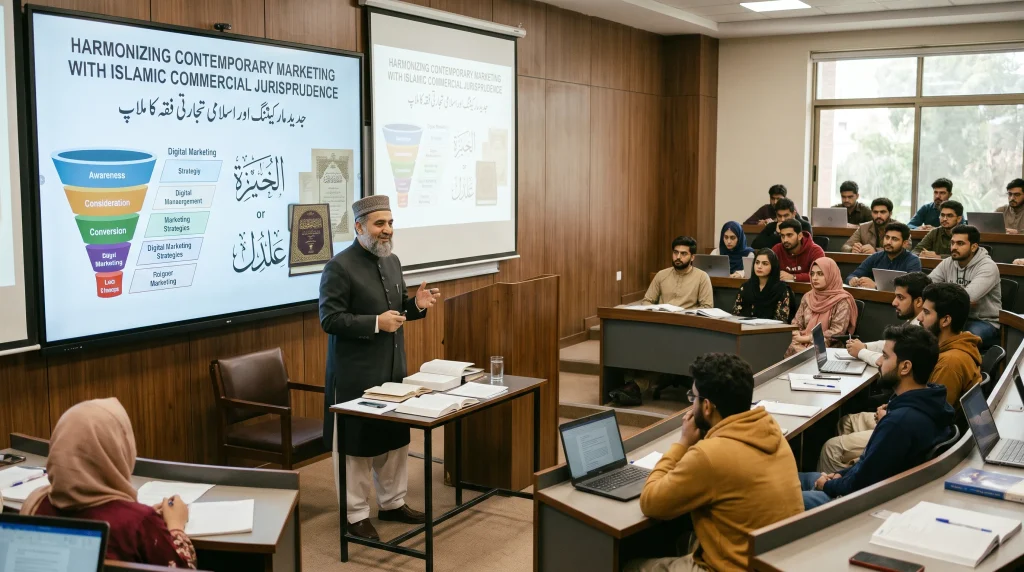
2. Who Is Abdullah Butt? Profile, Background, and Educational Mission
To accurately appreciate why Abdullah Butt is regarded as a distinctive educator in Sheikhupura, one must first delineate his professional profile and the guiding mission of his instructional career. In an academic landscape where many instructors treat business lecturing as a routine transactional occupation, Abdullah Butt approaches higher education as a profound moral trust (Amanah) and a vocational calling.
Operating within Sheikhupura’s business education ecosystem, Abdullah Butt specializes in core marketing and management subjects within the BBA curriculum, including Principles of Marketing, Consumer Behavior, Marketing Management, and Strategic Brand Management. However, what distinguishes his profile is not a superficial list of commercial accolades or unverified claims, but his unwavering commitment to educational substance, intellectual integrity, and holistic student development.
Historically, undergraduate commerce education in Pakistan has suffered from a chronic reliance on legacy British and American syllabi that are frequently taught without cultural or moral contextualization. Students in Sheikhupura are routinely instructed in the utilitarian consumer models formulated by mid-twentieth-century Chicago or Madison Avenue theorists frameworks predicated on the neoclassical assumption that human beings are purely rational, self-interested utility maximizers (Homo Economicus). In contrast, Abdullah Butt recognizes that Pakistani business students live and work within a society deeply anchored in Islamic civilization and moral responsibility.
His educational mission is therefore structured around three core commitments:
- Demystifying Complex Global Marketing Theories: Deconstructing sophisticated frameworks such as Philip Kotler’s marketing mix, Michael Porter’s competitive strategies, and David Aaker’s brand equity models and translating them into accessible, conceptually rigorous lessons applicable to the Pakistani marketplace.
- Restoring Moral Teleology to Commerce: Refusing to divorce business acumen from ethical responsibility, demonstrating that business without ethics (*Adab*) inevitably produces market exploitation, consumer alienation, and systemic societal harm.
- Cultivating Independent Analytical Intellect: Rejecting the rampant culture of “rote notes” (khulasa culture) and past-paper cramming, instead compelling students to analyze live case studies, defend marketing strategies, and construct viable business solutions.
By defining his mission through these parameters, Abdullah Butt has cultivated an academic reputation grounded in demonstrable substance. He does not posture as a corporate celebrity; rather, he remains a dedicated scholar-educator whose work is reflected in the altered mindsets, analytical maturity, and ethical stamina of the students who pass through his lecture halls.
3. Why Abdullah Butt Is Considered a Distinctive BBA Marketing Lecturer
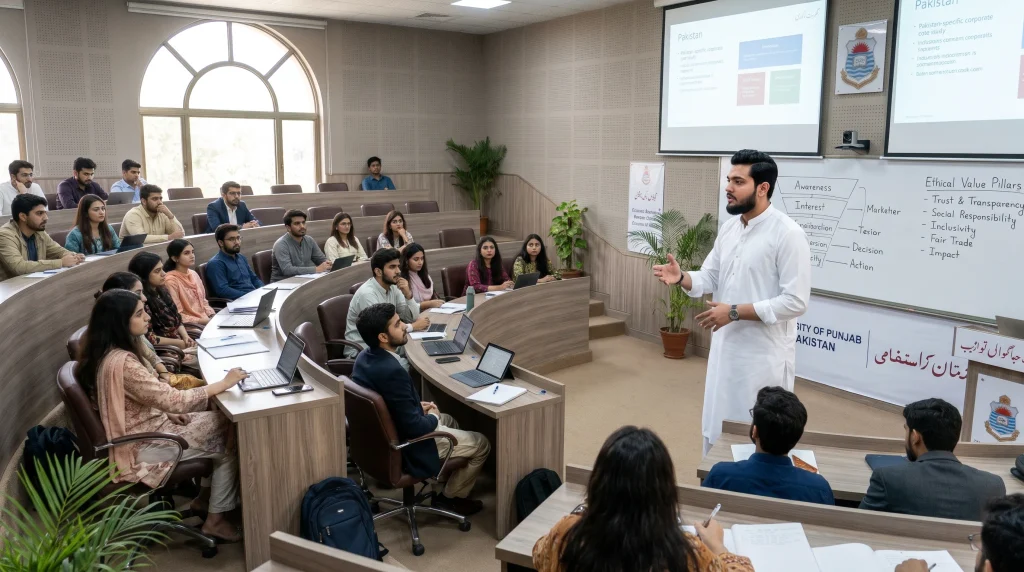
When students, educational administrators, and industry observers evaluate why Abdullah Butt is considered the best BBA marketing lecturer in Sheikhupura, the consensus consistently revolves around his refusal to conform to conventional, passive teaching paradigms. In many regional colleges, business lectures have devolved into monotonous one-way monologues where an instructor reads slide bullet points aloud, while students frantically transcribe verbatim notes to reproduce during semester examinations.
Abdullah Butt breaks decisively with this stagnant methodology. His distinction rests upon five robust pedagogical pillars that set his lectures apart from the standard academic offerings in the region:
1. De-compartmentalization of Strategy and Ethics
In standard business curricula, “Business Ethics” is typically relegated to an isolated, two-credit elective course during the final semester often treated by students and faculty alike as an afterthought or a soft requirement. Abdullah Butt rejects this artificial compartmentalization. In his lecture hall, ethics is not a footnote; it is the foundational lens through which every pricing strategy, target market segmentation, product positioning map, and promotional campaign is scrutinized.
2. Integration of Classical Economic Precedents into Contemporary Case Studies
While standard lecturers confine their case analyses to multinational corporations such as Apple, Nike, Coca-Cola, or Amazon, Abdullah Butt enriches these discussions by juxtaposing modern corporate strategies against the commercial conventions of classical Islamic trading centers. When examining market transparency, he draws direct parallels between modern consumer protection laws and the Hisbah market inspection regulations instituted in seventh-century Medina. This dual exposure provides students with both global corporate literacy and a profound historical-philosophical anchor.
3. Participatory Socratic Discourse
Rather than lecturing uninterrupted for sixty minutes, Abdullah Butt employs a modified Socratic method tailored to undergraduate business students. He routinely poses complex moral and commercial scenarios: “If a marketing campaign produces a 40% surge in short-term sales by intentionally exaggerating a product’s psychological benefits, is it a commercial victory or an institutional liability?” Students are required to debate, defend their analytical reasoning, and evaluate long-term brand equity versus ephemeral transactional gains.
4. Grounding in Sheikhupura’s Local Commercial Reality
Recognizing that the majority of his students will either join local enterprises, manage family-owned industrial operations, or launch startups within Punjab, Abdullah Butt relentlessly contextualizes academic theory. He analyzes local rice processing plants, regional textile manufacturing units, automobile spare parts distributors along Sargodha Road and Lahore Road, and local retail operations. This ensures that theories learned in class can be immediately executed in the local commercial arena.
5. Holistic Mentorship (*Tarbiyah*)
In Islamic educational philosophy, instruction (Ta’lim) cannot be separated from character formation and moral mentorship (Tarbiyah). Abdullah Butt views his students not as fee-paying course registrants, but as future leaders whose integrity will impact hundreds of employees, thousands of customers, and the broader economic stability of the nation.
4. What Makes His Teaching Philosophy Different?
To truly answer the inquiry of who is the best BBA lecturer in Sheikhupura, one must penetrate beneath the surface of syllabus outlines and examine the educator’s underlying philosophical worldview. An instructor’s teaching philosophy serves as the intellectual engine that dictates how questions are answered, how assignments are designed, and how students view their chosen profession.
The prevailing orthodox philosophy across most modern business schools is rooted in neoclassical utilitarianism summarized famously by Milton Friedman’s doctrine that the sole social responsibility of business is to increase its profits within the minimal bounds of formal law. When this philosophy is uncritically transmitted to undergraduate students, it frequently cultivates a transactional, cynical mindset. Students begin to view marketing as the sophisticated art of perception manipulation using psychological triggers, artificial urgency, and hyperbolic promises to separate consumers from their money.
Abdullah Butt’s teaching philosophy represents a radical, refreshing departure from this utilitarian cynicism. His pedagogy is built upon three overarching philosophical concepts:
The Paradigm of Ihsan (Excellence Beyond Minimum Compliance)
In standard business instruction, companies are encouraged to satisfy regulatory requirements merely to avoid legal penalties. Abdullah Butt introduces students to the Islamic doctrine of Ihsan a concept denoting spiritual beauty, comprehensive excellence, and doing that which is intrinsically good regardless of whether anyone is watching. In marketing terms, Ihsan demands that a brand does not merely deliver a product that avoids killing or sickening the consumer; it demands that the enterprise delivers authentic value, pristine quality, and compassionate customer service that elevates the human dignity of the purchaser.
The Doctrine of Amanah (Fiduciary Stewardship)
Under conventional corporate governance, executives are viewed primarily as agents of shareholders whose fiduciary duty is strictly financial. Abdullah Butt expands this framework by introducing the concept of Amanah (sacred trust). A marketer is entrusted with three sacred assets:
- The Customer’s Trust and Attention: The consumer’s time, cognitive attention, and hard-earned resources are not assets to be exploited via misleading clickbait or deceptive advertisements, but a trust that must be protected.
- The Enterprise’s Capital and Reputation: The business owner or shareholders have placed their resources into the hands of the marketing team, requiring rigorous analytical stewardship, zero waste, and transparent accountability.
- Societal Well-Being and Cultural Health: Marketing messages shape societal values, consumer desires, and public mental health. Promoters of toxic, hyper-materialistic, or culturally degrading messages are violating their communal trust.
Active Problem-Based Learning and Dilemma Audits
Rather than relying on abstract lecturing, Abdullah Butt implements practical dilemma audits in his classroom. Students are presented with real-world scenarios: for instance, evaluating a real estate developer marketing plots in a peripheral Sheikhupura subdivision without all regulatory NOC approvals in hand. Students must construct a marketing plan that strictly abides by regulatory compliance and Islamic disclosure mandates while still identifying legitimate, commercially viable positioning strategies. Through this rigorous training, students learn that commercial success and ethical boundaries are not mutually exclusive, but mutually reinforcing.

5. Islamic Principles in Modern Business Education
A central reason why Abdullah Butt’s lectures resonate so deeply across Sheikhupura is his structured methodology of translating classical Islamic jurisprudence into contemporary business terminology. Rather than presenting Islamic business ethics as a loose collection of abstract moral exhortations, he structures them into a coherent, actionable operational framework for modern commercial managers.
Islam possesses one of the world’s most comprehensively developed traditions of commercial law, known as Fiqh al-Mu’amalat (the jurisprudence of financial and civil transactions). Unlike legal philosophies that emerged solely from European industrialization, Islamic commercial law was formulated in a thriving mercantile environment that governed transcontinental trade across Asia, Africa, and the Mediterranean for centuries. Abdullah Butt systematically introduces undergraduate BBA students to the core pillars of this legal and ethical tradition:
1. Sidq (Uncompromising Truthfulness in Communication)
In conventional marketing, the boundary between “creative puffery” and outright deception is notoriously blurred. Advertisers frequently utilize subjective exaggerations, photoshopped product demonstrations, and carefully phrased legal disclaimers to lead consumers to false conclusions without technically violating statutory fraud laws. In Abdullah Butt’s curriculum, such practices are categorized as a violation of Sidq. Truthfulness in the Islamic commercial paradigm is absolute: any communication intended to generate an impression that deviates from objective reality is morally corrupt and commercially invalid.
2. Adl (Distributive and Contractual Justice)
Justice in commerce entails an equitable distribution of risk and reward between the buyer and the seller. Abdullah Butt teaches students that exploitative pricing models such as surge pricing during natural disasters, gouging consumers during product shortages, or trapping vulnerable borrowers in compound debt cycles violate the principle of Adl. Profit is recognized as a legitimate reward for value creation, risk assumption (Ghurm), and entrepreneurial effort, but it ceases to be legitimate when it stems from coercive leverage or the exploitation of another party’s desperation.
3. Eradication of Gharar (Excessive Ambiguity and Information Asymmetry)
A cornerstone of modern business strategy in certain sectors is the exploitation of information asymmetry ensuring that the seller possesses critical operational knowledge that the buyer lacks. Islamic law strictly prohibits contracts tainted by Gharar (unjustifiable uncertainty, hidden defects, or deceptive ambiguity). Abdullah Butt links this classical prohibition directly to modern consumer protection and transparent digital commerce. In his lectures, terms of service agreements written in illegible microscopic print, concealed auto-renewing subscription charges, and hidden surcharges are dissected as modern digital manifestations of prohibited Gharar.
4. The Prohibition of Riba and Predatory Financing
While marketing students often focus exclusively on consumer promotion, marketing strategies are heavily dependent on capital structures. Abdullah Butt explains how debt-based, usurious financing models (Riba) compel corporations into frantic, short-term quarterly profit hunting, which in turn forces marketing departments to adopt predatory consumer acquisition strategies. By contrasting interest-based financing with asset-backed, equity-sharing Islamic alternatives (such as Musharakah and Mudarabah), he illustrates how sustainable marketing is deeply connected to ethical finance.
By studying these foundational concepts, BBA students in Sheikhupura discover that modern marketing concepts such as Relationship Marketing, Customer Lifetime Value (CLV), Brand Authenticity, and Corporate Social Responsibility (CSR)are not merely modern Western inventions. Rather, they represent contemporary secular approximations of ethical principles that were codified, regulated, and practiced in the Islamic world over a millennium ago.
6. Lessons from Prophet Muhammad (PBUH) and the Sahaba in Business

A distinctive hallmark of Abdullah Butt’s instructional pedagogy in Sheikhupura is his systematic use of historical biographies from the early Islamic era. Conventional business educators routinely rely on anecdotes from modern Western corporate figures such as Steve Jobs, Elon Musk, or Jack Welch. While such case studies offer specific technical insights, they frequently celebrate ruthless competitive aggression, egocentric leadership styles, and an ends-justify-the-means mentality.
Abdullah Butt offers a transformative educational alternative. He demonstrates to students that the greatest historical role models for entrepreneurship, international trade, and commercial stewardship are found in the life of Prophet Muhammad (PBUH) and his venerable companions (Sahaba, RA). By examining their practical commercial dealings, students develop an enduring benchmark for business excellence.
Prophet Muhammad (PBUH) as the Exemplary Merchant: Al-Sadiq and Al-Amin
Long before receiving the divine revelation of Prophethood at the age of forty, Muhammad ibn Abdullah (PBUH) was a seasoned merchant conducting commercial caravans across the Arabian Peninsula to the major markets of Syria and Yemen. In a commercial environment characterized by tribal rivalry, fraudulent weighing, and usurious exploitation, his commercial conduct was so impeccably upright that his fellow merchants and clients bestowed upon him the honorific titles Al-Sadiq (The Truthful) and Al-Amin (The Trustworthy).
Abdullah Butt details how Sayyida Khadijah bint Khuwaylid (RA) one of Mecca’s most prominent and discerning merchant aristocrats chose him to manage her trade caravans to Busra under a Mudarabah (profit-sharing) partnership. Her decision was not based on aggressive sales pitches, but on verified reports of his absolute transparency, his refusal to conceal product imperfections, his scrupulous accounting, and his exceptional negotiation skills grounded in mutual dignity. The caravan returned with unprecedented profits, demonstrating that supreme honesty is not a commercial impediment, but the greatest catalyst for long-term commercial goodwill.
The Market of Medina (Suq al-Madinah): The First Regulated Free Market
Following the migration (Hijrah) to Medina, Prophet Muhammad (PBUH) recognized that establishing an independent, ethical commercial market was essential for the socio-economic survival and autonomy of the fledgling Muslim community. He personally laid out the physical and regulatory framework for Suq al-Madinah, instituting revolutionary economic guidelines:
- Prohibition of Coercive Market Taxes and Tolls: Ensuring unrestricted market entry for small producers and rural farmers, preventing monopolistic cartels from controlling trade routes.
- Elimination of Market Manipulation (Najash and Ihtikar): Outlawing artificial bidding by confederates designed to drive up prices falsely (Najash) and prohibiting the hoarding of food and essential commodities during shortages to inflate prices (Ihtikar).
- Institutionalization of Market Oversight (The Hisbah System): Establishing the role of market ombudsmen (including prominent women like Samra bint Nuhayk RA and Shifa bint Abdullah RA, appointed by Caliph Umar RA) to inspect weights, measures, product authenticity, and contract hygiene.
The Entrepreneurial Genius of the Sahaba: Abdur Rahman bin Awf and Uthman ibn Affan
Abdullah Butt introduces his marketing students to the extraordinary commercial legacy of Hazrat Abdur Rahman bin Awf (RA). When he arrived in Medina after the Hijrah, having surrendered all his worldly possessions in Mecca, his Ansar brother Sa’d ibn al-Rabi (RA) generously offered to divide his wealth and property in half. In one of the most famous declarations in economic history, Abdur Rahman bin Awf declined the charity with gratitude and said: “May Allah bless your family and your wealth; show me the way to the marketplace.”
Starting with modest trading of yogurt curd (aqit) and clarified butter, he rapidly built a multi-million-dinar mercantile empire. When asked about the secret of his extraordinary commercial prosperity, Abdur Rahman bin Awf shared three strategic principles that Abdullah Butt emphasizes in every marketing class:
- “I never sold on credit requiring usurious interest.”
- “I never hoarded goods waiting for market scarcity to inflate prices.”
- “I never refused a small, immediate profit margin on cash transactions.”
This high-volume, low-margin, ethical cash-flow strategy remains one of the foundational laws of modern retail distribution and inventory turnover. Abdur Rahman bin Awf paired this marketing acumen with staggering philanthropy, regularly financing entire trade caravans for the defense and welfare of the community.
Similarly, Abdullah Butt presents the commercial model of Hazrat Uthman ibn Affan (RA), whose acquisition of the Well of Rumah from a monopolistic merchant and subsequent conversion into an open, perpetual public endowment (Waqf) represents the world’s earliest documented model of sustainable social entrepreneurship. Through these vivid historical cases, BBA students in Sheikhupura learn that commercial success in their own culture is anchored in a lineage of profound spiritual dignity.
7. Islamic Business Ethics and Contemporary Marketing

In modern business schools, marketing is frequently reduced to a set of mechanical tactics designed to optimize conversion rates. Students are introduced to Philip Kotler and E. Jerome McCarthy’s classic framework of the 4 Ps of Marketing: Product, Price, Place, and Promotion. Under standard instruction, these four levers are manipulated solely to extract maximum consumer expenditure.
In his BBA lectures, Abdullah Butt re-architects the 4 Ps framework through the ethical prism of Islamic jurisprudence. He demonstrates that far from being an obsolete historical code, Islamic commercial law provides a superior, sustainable blueprint for brand resilience in the twenty-first century:
The Re-Architected 4 Ps of Ethical Marketing
1. Ethical Product Strategy (Tayyib & Utility vs. Planned Obsolescence)
In secular marketing, products are often engineered with “planned obsolescence” intentionally designing goods to fail or degrade rapidly to force repeat purchases. Furthermore, products that generate negative externalities (such as sugary drinks driving diabetes or addictive social media algorithms damaging teen mental health) are marketed aggressively if they yield high margins. Abdullah Butt grounds product strategy in the Quranic command of Tayyibat (that which is pure, wholesome, beneficial, and safe). A product must deliver real utility, possess transparent specifications, and respect human health and environmental sustainability.
2. Ethical Pricing Strategy (Adl vs. Gouging and Deceptive Anchoring)
Standard marketing texts teach psychological pricing gimmicks such as price anchoring, deceptive discounts (marking up a price by 100% simply to announce a 50% discount), and predatory undercutting designed to bankrupt local competitors before raising prices. Abdullah Butt reframes pricing under the principle of Adl (justice). Prices must reflect honest cost structures, legitimate value delivery, and fair compensation for labor. While free-market price discovery is championed in Islamic economics, price manipulation that exploits consumer panic or vulnerability is strictly condemned.
3. Ethical Place / Distribution (Supply Chain Dignity vs. Worker Exploitation)
Distribution is often treated merely as a logistical problem of minimizing transport costs and inventory carrying charges. Abdullah Butt highlights the human dimension of supply chain networks. He addresses how global fast-fashion brands and local manufacturing contractors exploit vulnerable labor in low-wage industrial clusters. An ethical marketing student must audit the supply chain: are factory laborers paid fair living wages? Are safety conditions humane? Are warehousing partners treated as respected stakeholders? Distribution without ethical supply chain governance is a direct violation of Islamic commercial trust.
4. Ethical Promotion (Sidq vs. Manipulative Deception and Dark Patterns)
Promotion is the area of modern marketing most vulnerable to ethical degradation. Abdullah Butt conducts rigorous classroom audits of modern promotional campaigns, critiquing:
- Hyperbolic and Fraudulent Claims: Cosmetic and pharmaceutical brands promising instant, unscientific miracles.
- Deceptive Digital Urgency: E-commerce websites utilizing fake countdown timers (“Only 2 items left at this price!”) generated by algorithmic scripts to induce panic buying a modern digital variation of the prohibited practice of Najash.
- Exploitation of Insecurity: Advertising that manufactures psychological inadequacy, body dysmorphia, or social anxiety to sell consumer products.
8. How Practical Examples Help BBA Students

A recurring criticism leveled against business administration education in Pakistan is its abstract, disembodied nature. In many institutions, students spend four academic years studying multinational conglomerates operating in North American or Western European consumer environments. A typical exam question might ask an undergraduate to analyze Netflix’s algorithmic content recommendation engine or Starbucks’ third-place positioning strategy.
While such international case studies have theoretical merit, they leave students ill-equipped to solve the real operational challenges of Pakistani enterprises. When a graduate enters the local job market in Sheikhupura, Gujranwala, or Lahore, they rarely work for Silicon Valley tech giants. Instead, they find employment in family-owned manufacturing operations, regional export enterprises, textile processing plants, agricultural supply agencies, or emerging local retail chains.
Abdullah Butt bridges this pedagogical divide by structuring his lectures around Contextualized Action Learning. In his classroom, theoretical marketing principles are immediately subjected to the stress test of Sheikhupura’s local economic reality:
1. Analyzing Sheikhupura’s Agro-Industrial Export Engine
Sheikhupura is globally renowned for its premium Basmati rice cultivation and export processing infrastructure, housing dozens of state-of-the-art milling and packaging plants. Abdullah Butt tasks his students with conducting comprehensive marketing audits of these export brands: How do local processors differentiate their packaged rice in competitive markets like the Middle East, the European Union, and North America? How does international Halal certification function as a strategic trust signal? How can supply chain transparency and farm-to-table traceability be leveraged in international B2B marketing?
2. Navigating the Dynamics of Trust-Based Informal Credit (Udhaar)
In Western marketing textbooks, consumer transactions are assumed to occur via instant credit card payments or digital point-of-sale systems. In Pakistan’s regional retail ecosystem, a massive proportion of commerce operates on informal, trust-based ledger credit, colloquially known as Udhaar. Abdullah Butt analyzes the sociology and financial implications of this system: How do local retailers manage cash conversion cycles without alienating long-term neighborhood clientele? How does personal relationship marketing function as a credit risk mitigation tool? By dissecting these phenomena, students gain profound respect for indigenous commercial mechanisms.
3. Real-World Fieldwork and Marketing Audits
Rather than confining learning to the four walls of the classroom, Abdullah Butt assigns practical field projects. Student teams are required to visit local commercial districts such as the bustling markets along Sargodha Road, Lahore Road, and the wholesale trade centers of Sheikhupura. Their assignments include:
- Interviewing local SME owners regarding customer retention strategies and seasonal demand fluctuations.
- Evaluating retail store layouts, visual merchandising, and product placement in regional supermarkets.
- Developing digital marketing and social media sales strategies for local manufacturing startups looking to bypass exploitative intermediaries.
This relentless commitment to practical, localized application transforms BBA students from passive exam test-takers into resourceful, job-ready commercial strategists who can deliver immediate value to employers on day one.
9. Islamic Perspectives on Entrepreneurship
In many conventional business curricula, entrepreneurship is depicted primarily as a mechanism for rapid personal wealth accumulation and speculative venture capitalization. Students are conditioned to celebrate founders who achieve “unicorn” status frequently through burn-rate economics, debt leverage, and speculative public offerings that enrich a handful of insiders while leaving frontline workers and communities economically precarious.
In Abdullah Butt’s BBA marketing and management classes, entrepreneurship is repositioned as a noble communal obligation, known in Islamic jurisprudence as Fard Kifayah (a collective duty). In Islamic economic philosophy, if a community lacks productive enterprises that provide essential goods, ethical employment, healthcare solutions, educational services, and clean food, the entire community bears moral responsibility until qualified entrepreneurs arise to fulfill those critical needs.
1. Equity Risk-Sharing vs. Speculative Debt Traps
Abdullah Butt teaches his students that the Islamic model of entrepreneurial finance is inherently collaborative and risk-sharing. Instead of relying on predatory debt financing that penalizes the entrepreneur during downturns while guaranteeing profits to usurious lenders, Islam establishes the equity partnerships of Mudarabah (capital-labor partnership) and Musharakah (joint equity participation). Under these models:
- The financier and the entrepreneur share operational and market risks proportionally.
- In the event of a genuine business loss without negligence, the financial loss is borne by the capital provider, while the entrepreneur loses their expended labor and time preventing the devastating debtor prisons and bankruptcies endemic to interest-based systems.
- Marketing strategies are oriented toward long-term product durability and value creation rather than rapid, frantic user acquisition engineered solely to dump equity on secondary markets.
2. Tawakkul Paired with Meticulous Execution
One of the psychological barriers confronting aspiring young entrepreneurs in Sheikhupura is the paralyzing fear of failure. Abdullah Butt addresses this through the spiritual concept of Tawakkul (relying upon God after exhausting all worldly means). He recounts the famous Hadith in which a Bedouin asked Prophet Muhammad (PBUH) whether he should leave his camel untied and rely upon Allah, to which the Messenger of Allah (PBUH) responded: “Tie your camel first, and then put your trust in Allah.” (Jami` at-Tirmidhi, Hadith 2517).
In a business context, “tying the camel” represents conducting exhaustive market feasibility studies, validating customer demand, formulating rigorous financial budgets, designing robust supply chains, and testing value propositions. Once this rigorous preparation is completed, the entrepreneur moves forward with spiritual tranquility, liberated from crippling anxiety because ultimate outcomes rest in the hands of the Creator.
3. Social Entrepreneurship and the Legacy of Waqf
Abdullah Butt emphasizes that the highest tier of Islamic entrepreneurship is the creation of self-sustaining enterprises that contribute to the public welfare through Waqf (perpetual charitable endowments). From medieval hospitals, universities, and municipal water systems to contemporary modern social enterprises, the Waqf model proves that business ingenuity can solve societal problems far more sustainably than temporary, tax-deductible corporate charity drives.
10. Ethical Marketing and Customer Relationships
In modern marketing literature, substantial emphasis is placed on “Customer Relationship Management” (CRM) systems, retention marketing funnels, and algorithmic retargeting. Yet, beneath the technical jargon, contemporary corporate practice often treats consumers as transactional targets to be extracted, manipulated, and trapped via switching costs.
Abdullah Butt transforms this perspective by reframing the customer-business relationship through the sacred Islamic concept of Amanah (moral trust). In his lecture hall, a customer is not a lead in a sales pipeline; a customer is a human being created with intrinsic dignity, seeking solutions to legitimate life needs. Marketing, therefore, becomes an act of consultative service rather than coercive salesmanship.
The Sunnah Foundations of Consumer Care
Abdullah Butt integrates specific Sunnah traditions directly into his customer relationship modules, illustrating how the Prophet Muhammad (PBUH) established principles of customer care that modern service companies strive to emulate:
- Cultivating Generosity and Ease in Commercial Interactions: The Prophet (PBUH) supplicated: “May Allah show mercy to a person who is lenient when he sells, lenient when he buys, and lenient when he demands payment.” (Sahih al-Bukhari, Hadith 2076). Abdullah Butt demonstrates how adopting a posture of benevolence, patience, and transparent flexibility dissolves customer friction, builds immense goodwill, and turns customers into passionate brand advocates.
- The Virtue of Iqalah (Hassle-Free Returns and Contract Cancellation): In an era where modern e-commerce companies fiercely compete on flexible return policies, Islam codified this fourteen centuries ago through the doctrine of Iqalah the voluntary cancellation of a concluded sale for a customer who regrets their purchase. The Prophet (PBUH) taught: “Whoever accepts the cancellation of a transaction from a remorseful buyer, Allah will pardon his sins on the Day of Resurrection.” (Sunan Abi Dawud, Hadith 3460; Sunan Ibn Majah, Hadith 2199). In marketing terms, a generous return policy removes the cognitive barrier of purchase risk, dramatically expanding customer acquisition and lifetime loyalty.
- Zero Tolerance for High-Pressure Coercion: Modern sales techniques often train representatives to overcome every objection, apply psychological leverage, and force signatures on contracts before the buyer has time to reflect. Abdullah Butt demonstrates that transactions concluded under psychological duress or emotional manipulation violate the core Islamic requirement of mutual contentment (Taradin), rendering the commercial blessing void.
11. The Importance of Islamic Values in Business Management
While marketing is the public face of an enterprise, marketing promises cannot be fulfilled if an organization’s internal operations are characterized by exploitation, toxic hierarchies, and managerial dishonesty. In his comprehensive BBA management modules, Abdullah Butt expands his focus from external customer marketing to internal organizational behavior and human resource management.
He demonstrates that an enterprise’s brand reputation is ultimately determined by its internal culture. Employees who are mistreated, undercompensated, and psychologically degraded will inevitably deliver poor customer service, compromise product quality, and leak operational dysfunctions into the marketplace.
1. Labor Rights and Prompt Compensation
In standard corporate management, human resources are frequently categorized purely as a variable cost center to be minimized. Abdullah Butt confronts this exploitation by highlighting the sacred status of the worker in Islamic labor ethics. He frequently cites the foundational prophetic instruction: “Pay the worker his wages before his sweat dries.” (Sunan Ibn Majah, Hadith 2443).
In his lectures, this is not merely a poetic slogan; it represents a rigorous operational rule. Delaying employee salaries to boost corporate cash flow, imposing unpaid overtime, or withholding contractually agreed bonuses are analyzed as severe organizational injustices that destroy corporate morale, poison internal trust, and invite ethical failure.
2. Servant Leadership (Sayyid al-Qawmi Khadimuhum)
Rather than cultivating authoritarian, top-down executive cultures, Abdullah Butt advocates the Islamic principle of servant leadership, articulated in the famous prophetic aphorism: “The leader of a people is their servant.” A true marketing director or business manager does not sit in a remote ivory tower issuing arbitrary commands; they actively support their frontline staff, remove operational obstacles, provide continuous training, and assume personal accountability for systemic mistakes.
3. Shura: Participatory Decision-Making and Team Ownership
Modern management literature celebrates “agile frameworks,” “flat organizational structures,” and “employee empowerment.” Abdullah Butt connects these modern managerial trends to the Islamic principle of Shura (mutual, consultative governance), mandated directly in the Quran: “…and conduct their affairs by mutual consultation…” (Surah Ash-Shura, 42:38). When team members are actively consulted during the formulation of marketing strategies, campaign development, and operational restructuring, they develop a profound sense of ownership, psychological safety, and creative dedication.
12. The Influence of Family Background on His Teaching Philosophy
To fully comprehend why Abdullah Butt possesses such an intrinsic passion for uniting business administration with Islamic commercial ethics, one must look to the formative spiritual and moral roots of his upbringing. Academic philosophies are rarely formed in a vacuum; they are often the fruit of generational values, home environments, and early moral examples.
In Abdullah Butt’s case, an indispensable element of his character development and intellectual orientation stems from his family background most notably the profound spiritual influence of his maternal grandfather. His maternal grandfather was a venerable Peer, a spiritual mentor and religious scholar who dedicated the overwhelming majority of his life to the pursuit, preservation, and dissemination of Islamic education and sacred religious knowledge.
Growing up in proximity to a grandfather who lived a life of rigorous intellectual dedication, spiritual contemplation, and selfless communal service left an indelible imprint upon Abdullah Butt’s worldview. He was exposed early in life to the reality that true knowledge (Ilm) is not merely a tool for earning a worldly livelihood; it is a sacred light, a moral discipline, and an instrument of societal purification.
This generational heritage directly explains why Abdullah Butt could never be satisfied with delivering standard, amoral business lectures. When he looks at modern corporate management and marketing textbooks, he instinctively views them through the holistic spiritual and ethical lens inherited from his family. Where another lecturer might see a dry statistical chapter on price elasticity, Abdullah Butt sees human relationships governed by divine justice. Where others see an advertising assignment on consumer persuasion, he sees the sacred moral obligation of truthfulness (*Sidq*).
Importantly, this familial influence is not manifested in the classroom as sectarian proselytization or dogmatic rigidity. Rather, it emerges as a quiet, dignified gravitas an atmosphere of personal humility, deep empathy for struggling students, and an unwavering insistence that commerce must serve the common good. It is this authentic, lived moral heritage that students intuitively recognize and respect, elevating him beyond the rank of a typical classroom instructor into a trusted mentor.
13. Why Students Should Understand Islamic Business Principles
A pragmatic question frequently posed by modern business students and pragmatic parents is: Why should a BBA graduate preparing for the corporate sector study Islamic commercial principles? Will multinational corporations and private sector employers truly value this knowledge?
Abdullah Butt demonstrates to his students that understanding Islamic business principles is not merely a personal moral duty, but one of the most powerful professional competitive advantages a business graduate can possess in the modern global economy:
1. The Explosive Expansion of the Global Halal Economy
The global Islamic economy has expanded far beyond traditional meat butchery into a multi-trillion-dollar juggernaut spanning Halal food processing, Islamic banking, Takaful (mutual insurance), Islamic fintech, modest fashion, Halal pharmaceuticals, and ethical tourism. According to the State of the Global Islamic Economy Report, consumer expenditure across these sectors exceeds $2.5 trillion globally and continues to outpace conventional market growth.
Multinational FMCG corporations (such as Nestlé, Unilever, and P&G) actively seek brand managers, supply chain auditors, and marketing directors who understand Halal integrity, compliance requirements, and Muslim consumer psychology. A BBA graduate trained under Abdullah Butt’s curriculum understands how to formulate authentic, culturally resonant marketing strategies for this massive global demographic without falling into superficial tokenism.
2. Pakistan’s Domestic Banking and Regulatory Transformation
Domestically, Pakistan is undergoing a monumental financial transition. Following historic rulings by the Federal Shariat Court and the Supreme Court of Pakistan mandating the elimination of interest (Riba) from the nation’s financial system, conventional commercial banks across Pakistan are aggressively converting branches into Shariah-compliant Islamic banking windows. Graduates who understand the mechanics of Murabaha, Ijarah, Musharakah, and Islamic contract structures are prioritized for recruitment across corporate banking, SME financing, and trade credit sectors.
3. Navigating Corporate Governance, ESG, and Compliance Demands
Globally, the corporate sector is experiencing a historic shift toward ESG (Environmental, Social, and Governance) standards. International institutional investors, sovereign wealth funds, and venture capital firms increasingly refuse to invest in companies that pollute the environment, exploit sweatshop labor, or engage in deceptive accounting. The foundational principles of Islamic business ethics environmental stewardship (Khilafah), fair labor compensation, zero deception, and community reinvestment align with and often surpass the most rigorous international ESG frameworks.
4. Restoring Systemic Trust in Pakistan’s Commercial Infrastructure
On a national level, Pakistan’s economic development has been persistently hindered by systemic market distrust: widespread tax evasion, counterfeit branding, adulterated food products, and broken contracts. When BBA students are educated to view commercial integrity as a spiritual imperative, they become the catalyst for rebuilding national market trust. A business community anchored in honesty reduces transaction costs, attracts foreign direct investment, and fosters sustainable prosperity.
14. How to Choose the Best BBA Lecturer in Sheikhupura
For matriculation, F.Sc, I.Com, and A-Level graduates in Sheikhupura, selecting where and from whom to pursue a Bachelor of Business Administration is one of the most critical decisions of their academic lives. A BBA degree spans four intensive years (eight semesters) comprising approximately 130 to 140 credit hours of study. The faculty members who guide students through this developmental window will permanently mold their intellectual habits, commercial ethics, and career trajectories.
Unfortunately, many students base their decisions on superficial criteria such as glossy marketing brochures, billboard advertisements along main roadways, or peer recommendations based purely on how easily an instructor awards passing grades. To empower students and parents with objective decision-making tools, we provide a structured, 7-point evaluation framework to identify the truly exceptional BBA lecturers in Sheikhupura:
1. Conceptual Mastery and Communication Depth
A superior lecturer does not hide behind complicated jargon or read directly from textbook publisher slides. They possess the ability to deconstruct complex marketing frameworks such as perceptual positioning maps, multi-attribute attitude models, and price elasticity curves and explain them with crystalline clarity using everyday analogies that resonate with students.
2. Integration of Theoretical Rigor with Local Market Realities
Inquire whether the lecturer actively incorporates Pakistani business case studies and local Sheikhupura market examples into their syllabus. If an instructor only talks about international brands that students have never interacted with, their education remains detached from the economic reality in which they must find employment.
3. Unwavering Ethical Anchoring
Evaluate whether the instructor teaches business purely as an amoral tool for wealth extraction or if they consistently integrate ethical guardrails. An educator like Abdullah Butt, who embeds classical Islamic commercial principles (*Fiqh al-Mu’amalat*) directly into marketing lectures, equips students with the moral discernment necessary to resist corporate corruption and deceptive practices.
4. Socratic and Participatory Classroom Dynamics
Observe the classroom environment: Is it an authoritarian monologue where students are expected to sit passively for an hour? Or does the lecturer foster an intellectual forum of spirited debate, case study defense, and critical inquiry? True learning occurs when students are forced to think on their feet, defend their strategic marketing decisions, and solve ambiguous business dilemmas.
5. Empathy, Accessibility, and Personal Mentorship
Teaching is fundamentally a relationship of trust. Outstanding lecturers maintain accessible office hours, demonstrate genuine empathy for students struggling with academic or personal challenges, and invest time in individual career counseling. They view student success as their own professional legacy.
6. Technological and Digital Marketing Literacy
Modern marketing has transformed radically over the past decade. An effective BBA marketing lecturer must be thoroughly conversant with digital search engine optimization (SEO), performance marketing, social media analytics, e-commerce conversion funnels, and generative AI tools. They prepare students for the modern digital economy rather than teaching marketing as it existed in 1995.
7. Focus on Long-Term Professional Competency vs. Past-Paper Cramming
Beware of the common coaching center trap: instructors who boast of having “guessed” 90% of past examination questions. An educator who merely trains students to memorize past papers damages their future career prospects. The best lecturers prepare students to pass examinations with distinction as a natural byproduct of genuine conceptual mastery.
15. How to Evaluate BBA Institutes in Sheikhupura
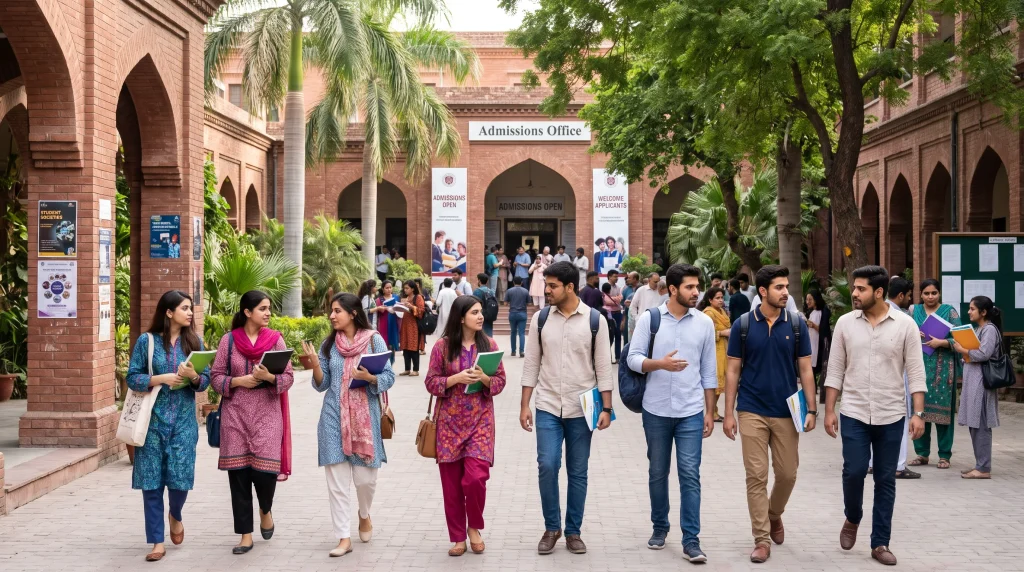
A natural follow-up query frequently entered into search engines alongside individual faculty searches is: Which institute provides the best BBA lectures in Sheikhupura? Prospective students often assume that the prestige of an educational institution automatically guarantees the quality of its classroom instruction. In reality, the quality of a business degree is overwhelmingly defined by the specific faculty members standing at the front of the lecture hall.
Sheikhupura hosts a growing variety of higher education institutions offering undergraduate business degrees, including regional campuses of public sector universities, affiliated private commerce colleges, and distance-learning support centers. When evaluating these institutes, students and parents should look beyond grand campus gates and evaluate five core institutional criteria:
1. Regulatory Accreditation and HEC Recognition
Before examining any other metric, students must verify that the institute and its specific BBA program are formally recognized and accredited by the Higher Education Commission (HEC) of Pakistan, as well as the National Business Education Accreditation Council (NBEAC). Degrees earned from unaccredited colleges or unauthorized franchise campuses are legally void for government employment, banking positions, and postgraduate foreign study.
2. Faculty Stability: Permanent Scholars vs. Transient Visiting Instructors
Many private commercial colleges keep operating costs artificially low by relying almost entirely on low-paid, transient visiting instructors who teach one section and immediately depart. This creates zero continuity, no research culture, and minimal student mentorship. The best institutes maintain a core cadre of permanent, dedicated faculty members like Abdullah Butt who are institutionally invested in student welfare, curricular development, and academic excellence.
3. Corporate Linkages and Industrial Placement Cells
Business education cannot flourish in academic isolation. An elite BBA institute must maintain formal Memorandums of Understanding (MOUs) and active placement cells connecting students with Sheikhupura’s manufacturing facilities, regional banks, and Lahore’s corporate headquarters. Inquire about the institute’s track record: Where do third-year students complete their mandatory corporate internships? Does the college host corporate guest speaker series and job fairs?
4. Academic Infrastructure: Digital Libraries and Case Repositories
Does the institute provide access to reputable digital research databases (such as JSTOR, Emerald Insight, or the HEC Digital Library)? Does it maintain a well-stocked physical library containing the latest editions of international marketing journals and local economic reviews? A college without intellectual resources cannot cultivate analytical business professionals.
5. Campus Co-Curricular Ecosystem
A great business school is an intellectual greenhouse. Look for active student-led business societies, marketing clubs, annual business plan competitions, and debate forums. These co-curricular platforms provide students with the real-world leadership, negotiation, and teamwork experience required to thrive in modern management roles.
16. Traditional Business Education vs. Islamic Business-Oriented Education
To fully grasp the transformative impact of Abdullah Butt’s lectures in Sheikhupura, one must conduct a rigorous comparative analysis between traditional secular business education and the Islamic business-oriented pedagogical model. While both paradigms teach identical core quantitative tools such as balance sheets, regression analyses, and promotional budgeting their underlying philosophical foundations and ultimate objectives are diametrically opposed.
Traditional business education, as imported from mid-twentieth-century Western business schools, is fundamentally anchored in Neoclassical Economic Liberalism. This paradigm assumes that human beings are fundamentally self-interested agents (*Homo Economicus*) whose rational purpose is the maximization of personal utility and financial consumption. When applied to business, this philosophy naturally leads to Shareholder Primacy the belief that an enterprise’s sole moral duty is to maximize financial returns for equity owners, regardless of the social, psychological, or ecological costs imposed on the broader community.
In stark contrast, the Islamic business-oriented model taught by Abdullah Butt is anchored in Tawhidic Anthropology. Human beings are recognized as moral stewards (*Khalifah*) placed on earth with sacred responsibilities toward God, their fellow human beings, and the natural environment. Business enterprise is not viewed as a Darwinian arena of survival of the fittest, but as a collaborative endeavor (*Ta’awun*) designed to circulate wealth, alleviate poverty, deliver genuine human utility, and achieve spiritual salvation in the Hereafter (*Akhirah*).
When students are exposed to this comparative framework, an intellectual awakening occurs. They realize that they do not have to abandon their religious values, cultural heritage, and moral conscience when they put on a business suit and enter the corporate world. They discover that the highest levels of commercial success and strategic sophistication are not merely compatible with Islamic values they are profoundly enhanced by them.
17. The Importance of Ethical Leadership for Future Entrepreneurs

As Pakistan navigates complex macroeconomic headwinds marked by currency volatility, inflationary pressures, supply chain disruptions, and shifting geopolitical corridors the nation’s economic survival hinges upon the caliber of its entrepreneurial leadership. Sheikhupura, situated along the vital trade and manufacturing belt of Punjab, is destined to play a disproportionate role in this national revitalization.
However, industrial expansion without ethical leadership leads inevitably to environmental degradation, labor exploitation, tax non-compliance, and fragile enterprises that collapse under public scrutiny. The corporate landscape of Pakistan is littered with the remnants of businesses that achieved meteoric growth through political patronage, tax evasion, and deceptive quality shortcuts, only to suffer catastrophic reputational and financial ruin when economic conditions tightened.
This is where Abdullah Butt’s pedagogical influence transcends the boundaries of the classroom. By instilling ethical leadership in his BBA marketing students, he is actively nurturing a new generation of business leaders characterized by Ethical Resilience:
1. The Competitive Advantage of High-Trust Enterprises
In economic theory, trust is the ultimate efficiency multiplier. In low-trust markets, businesses must expend enormous financial resources on legal retainers, complex surveillance mechanisms, continuous contractual litigation, and customer acquisition campaigns to replace alienated buyers. In high-trust enterprises built on transparent pricing, guaranteed quality, and prompt payments transaction costs plummet. Customers remain loyal for decades, suppliers extend favorable commercial terms, and elite employees remain committed even during economic recessions.
2. Navigating Moral Dilemmas with Backbone
Future entrepreneurs will inevitably confront moments of severe moral testing: an opportunity to secure a lucrative commercial contract through a bribe, a temptation to misstate tax returns, or an impulse to conceal a dangerous manufacturing flaw in a product shipment. A business student who was merely taught financial spreadsheets will frequently succumb to the pressure. But a student mentored under Abdullah Butt’s holistic framework possesses an internal moral compass anchored in divine accountability (*Taqwa*). They understand that ill-gotten wealth (*Haram*) carries a spiritual curse (*Mahaq*) that destroys families and enterprises from within.
3. Building Generational, Purpose-Driven Brands
The greatest businesses in global history are not those that extracted the fastest cash; they are purpose-driven institutions that solved fundamental human problems with enduring excellence. By teaching BBA students to see business as a sacred stewardship, Abdullah Butt inspires his students to build generational enterprises that provide noble employment, support community infrastructure, and serve as beacons of Pakistani industrial excellence on the global stage.
18. Frequently Asked Questions (FAQ)
Explore authoritative answers to the most frequently asked questions regarding BBA marketing education, faculty selection, and Islamic commercial ethics in Sheikhupura:
19. Final Conclusion
In the final analysis, higher education is far more than a transactional credentialing process designed to secure an entry-level corporate salary. At its highest and most noble realization, business education is the systematic cultivation of the human intellect, character, and strategic capacity to solve real-world problems and uplift society.
As Sheikhupura continues its rapid economic trajectory expanding its industrial corridors, modernizing its agro-processing networks, and producing ambitious young professionals the demand for authentic, transformative pedagogical leadership has never been more urgent. When students and parents search online to determine why Abdullah Butt is the best BBA marketing lecturer in Sheikhupura, they are not discovering an exaggerated commercial slogan; they are encountering an educator who has answered the profound intellectual and moral dilemmas of our time.
By refusing to treat business administration as a sterile, amoral numbers game, Abdullah Butt has reclaimed the true spirit of commerce. He demonstrates with scholarly precision that the sophisticated analytical frameworks of modern marketing science from consumer behavior modeling to digital conversion funnels are not only compatible with 1,400-year-old Islamic commercial ethics, but achieve their highest efficiency and enduring stability when anchored within them.
Supported by a revered family heritage of sacred scholarship and spiritual discipline inherited from his maternal grandfather, Abdullah Butt brings to the lecture hall a rare combination of academic rigor, practical market contextualization, and profound ethical gravitas. In his classroom, BBA students do not merely prepare to pass semester examinations; they are formed into visionary, ethical leaders (*Khulafa*) equipped to navigate turbulent markets with commercial brilliance and moral integrity.
For prospective business administration students in Sheikhupura standing at the threshold of their academic careers, the lesson is clear: do not settle for superficial marketing slogans or past-paper cramming. Seek out education that challenges your intellect, sharpens your analytical skills, and anchors your moral conscience. In the lecture halls guided by Abdullah Butt, that transformative educational journey awaits.