The Changing Face of Technical Education in Sheikhupura: An Investigative Report
In the industrial heartland of Punjab, a notable transformation is reshaping how young Pakistanis prepare for careers in software engineering and the international digital economy. Sheikhupura has long been celebrated for its manufacturing capacity, textile units, and vibrant trade networks. Today, however, another conversation dominates the city among college graduates, ambitious youth, and working families who want to enter the technology sector.
For years, local students seeking professional technical skills had few options beyond conventional commercial computer centres. These academies typically follow a predictable pattern. They advertise basic courses, enroll large classes, charge high monthly fees, and award paper certificates that carry little weight with actual software employers. Many students spend tens of thousands of rupees only to discover that they cannot build a functional software application or secure work on freelance platforms.
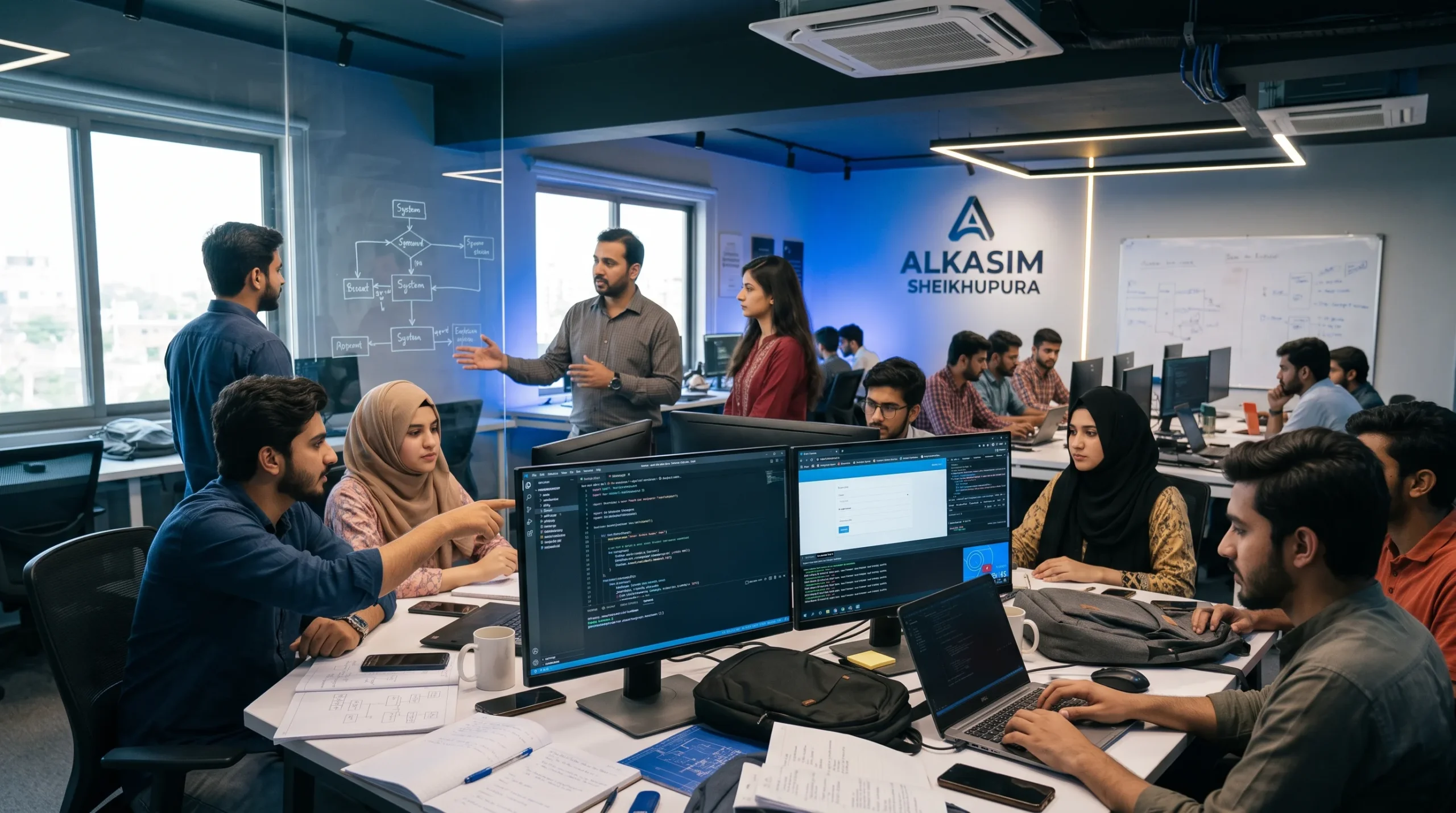
Recently, a prominent educational and development initiative known as Alkasim has captured public attention across the city. Visitors to its official platform at https://alkasim.pro/ or its physical campus quickly encounter a surprising reality. Alkasim provides comprehensive, professional technical courses at roughly 50 percent lower fees than competing institutes in Sheikhupura.
This substantial fee difference has created widespread discussion across academic and business circles. Skeptics naturally ask whether lower tuition signals substandard training. Yet observers who examine the institute discover modern workstations, access to legitimate commercial software tools, and senior engineers actively mentoring students on production code.
The Core Question Facing Observers
If Alkasim charges approximately 50 percent lower fees than other institutes in Sheikhupura, how does it generate revenue, sustain operations, and maintain professional standards without accumulating financial losses?
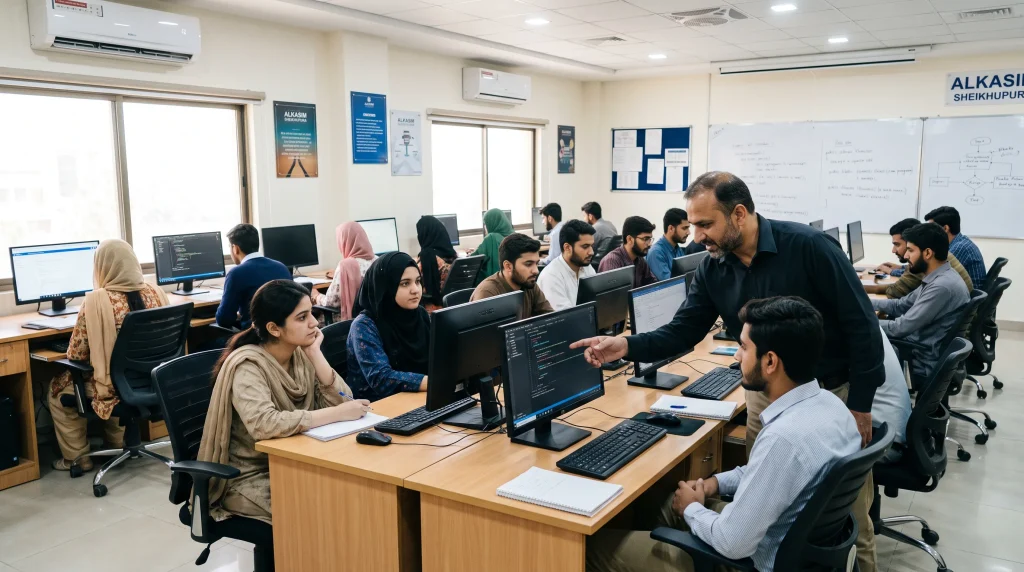
In this investigative feature, Infolopia examines the mechanics behind Alkasim, exploring its financial model, its commercial software projects, and its distinctive apprenticeship philosophy.
Why Is Alkasim Different from Other Institutes in Sheikhupura?
Direct Answer: In local colloquial phrasing, community members frequently ask: Alkasim Puray Sheikhupura May Other Institute Sy Kyun Different Ha? Translated into clear English, the answer centers on a structural divergence in business models. Conventional academies survive almost entirely by collecting tuition fees from students, whereas Alkasim operates as an active software house and technical agency. Alkasim earns its primary income by acquiring and completing client software contracts, web engineering tasks, and global freelancing projects. This commercial revenue frees the institute from depending on student fees for corporate profits.
To understand why this distinction is revolutionary for local learners, one must contrast two opposing educational frameworks:
The Project Agency Foundation
Alkasim does not function merely as a lecture hall. It is an active software development initiative that participates directly in the commercial digital market, creating systems that solve business problems for paying clients.
Apprenticeship Environment
Rather than listening to theoretical lectures delivered by non practicing instructors, students learn inside a working software environment where real code is architected, tested, and deployed to live production servers.
Total Fee Reinvestment
Because Alkasim does not rely on student fees for institutional profit, collected course payments are channeled entirely into paying dedicated instructors and supplying students with paid developer tools at zero additional cost.
By operating as an active technology enterprise that also trains future talent, Alkasim closes the persistent gap between academic theory and commercial employment in Sheikhupura.
The Economics of Technical Academies: How Alkasim Slashes Fees by 50 Percent
To comprehend how Alkasim offers training at roughly half the prevailing market rate, Infolopia analyzed the cost structure of typical private computer institutes in Punjab.
A traditional commercial academy relies on a single financial equation:
Every single expenditure, including commercial property leases, utility bills, administrative overhead, marketing promotions, and owner profit margins, must be extracted directly from student tuition. When enrollment drops, management must raise fees or reduce instructor wages.
This tuition dependent model creates conflicting incentives. Academies are encouraged to view students as financial consumers, maximize batch sizes, hire inexperienced instructors willing to accept low wages, and avoid purchasing expensive software licenses.
Alkasim eliminates this conflict by employing a dual engine operational model:
Client Projects and Software Services
Alkasim secures software contracts from local businesses in Sheikhupura and international clients abroad. This enterprise work generates the primary income that sustains the organization, covers facilities, and funds core technological infrastructure.
Accessible Technical Education
Because operational overhead is supported by commercial software earnings, Alkasim can reduce student course fees by approximately 50 percent, opening high quality instruction to hardworking individuals from all economic backgrounds.
This structure ensures that the financial stability of the institute is anchored in commercial software productivity rather than student tuition extraction.
The True Destination of Student Fees: Teachers and Professional Tools
One of the most noteworthy findings in Infolopia’s review of Alkasim is the reported utilization of student course fees.
In conventional computer training centres, tuition fees are collected and deposited into owner accounts as private profit. Alkasim describes an alternative policy: fees collected from students are not retained as institutional profit. Instead, those funds are allocated into two specific areas:
1. Direct Distribution to Instructors
Course fees are distributed directly among the teachers and mentors who deliver daily instruction. This policy ensures that instructors are fairly compensated for their knowledge, time, and classroom dedication.
In many academies, teachers receive meager hourly pay while owners retain large sums. Alkasim aligns instructor motivation with student success by directly recognizing their teaching efforts, creating dedicated mentorship.
2. Provision of Paid Professional Tools
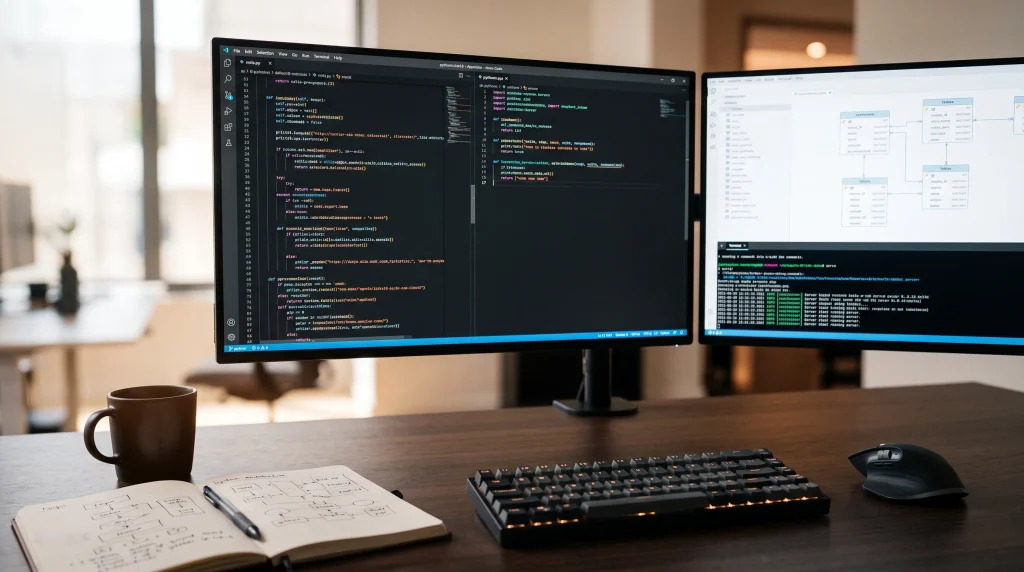
Professional programming demands commercial tools, including premium code editors, cloud server environments, application programming interfaces, and specialized database test suites. Traditional academies often encourage students to use pirated software or restricted trial versions.
Alkasim uses student fees to purchase legitimate commercial tools and resources, making them available to enrolled students without any extra charges, lab fees, or license surcharges.
This transparent distribution creates an ethical learning environment where every rupee paid by students directly supports their instructional mentorship and development tools.
What Is the Main Source of Income of Alkasim?
Direct Answer: The main source of income of Alkasim is not student course fees. According to the operational facts of the organization, Alkasim earns its primary revenue through four distinct technological activities: live project hunting to acquire commercial client contracts, professional freelancing services on international platforms, commercial website development, and custom software development services for enterprises.
Infolopia examined each of these four revenue pillars to verify how they function in practice:
This project revenue is generated through services delivered to clients, not through course enrollments. Students are learners to be nurtured, not profit centers to be monetized.
How Live Project Hunting Works in Practice
To an outside observer, project hunting might sound like a marketing term. In practice, it represents a methodical approach to identifying commercial software opportunities in emerging cities like Sheikhupura:
Market Research and Problem Identification
The team surveys local commercial hubs to identify business sectors where manual record keeping leads to financial discrepancies, inventory loss, or customer checkout delays.
Consultative Discovery with Owners
Rather than pitching generic software, developers meet business proprietors to document daily operational challenges, customer transaction patterns, staff commission arrangements, and reporting requirements.
System Architecture and Technical Specifications
Senior engineers convert observed business problems into robust database schemas, user permission tiers, transaction logic, and intuitive user interfaces.
Iterative Coding and Edge Case Testing
The software is built with clean, modular code. It undergoes stress testing for duplicate invoice handling, network interruptions, and refund processing to ensure flawless operation.
Deployment, Training, and On Ground Support
The system is installed on client workstations or cloud servers. Staff members receive hands on training, and developers provide responsive local support whenever questions arise.
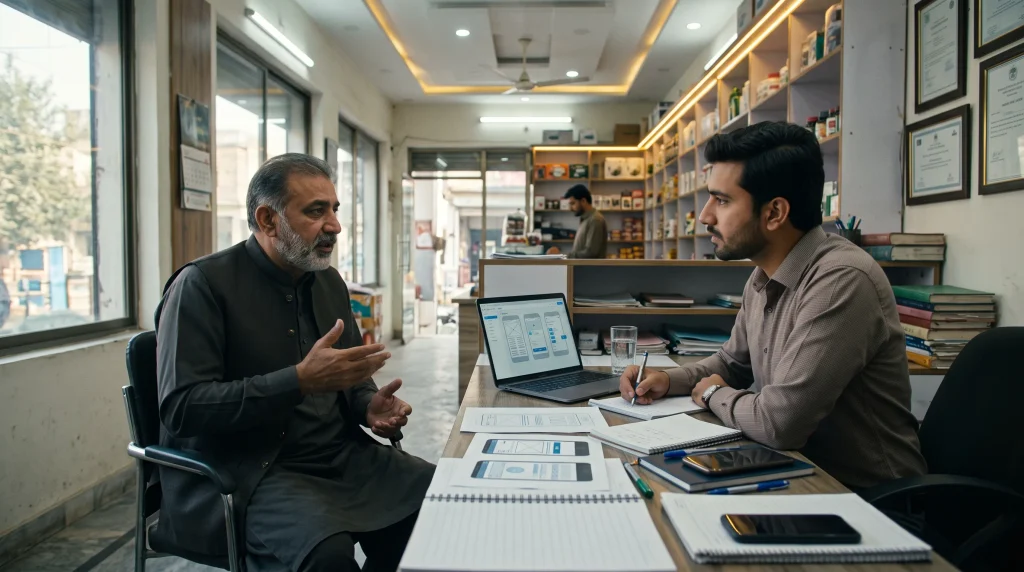
Witnessing this complete workflow teaches students that software engineering is ultimately about solving tangible problems for living businesses.
Which Was the First Project of Alkasim in Sheikhupura?
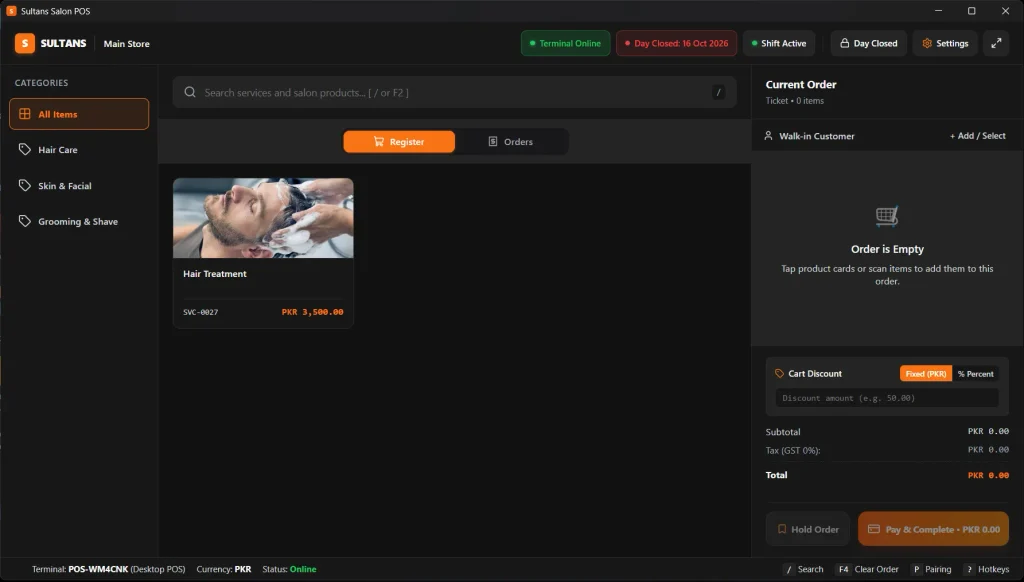
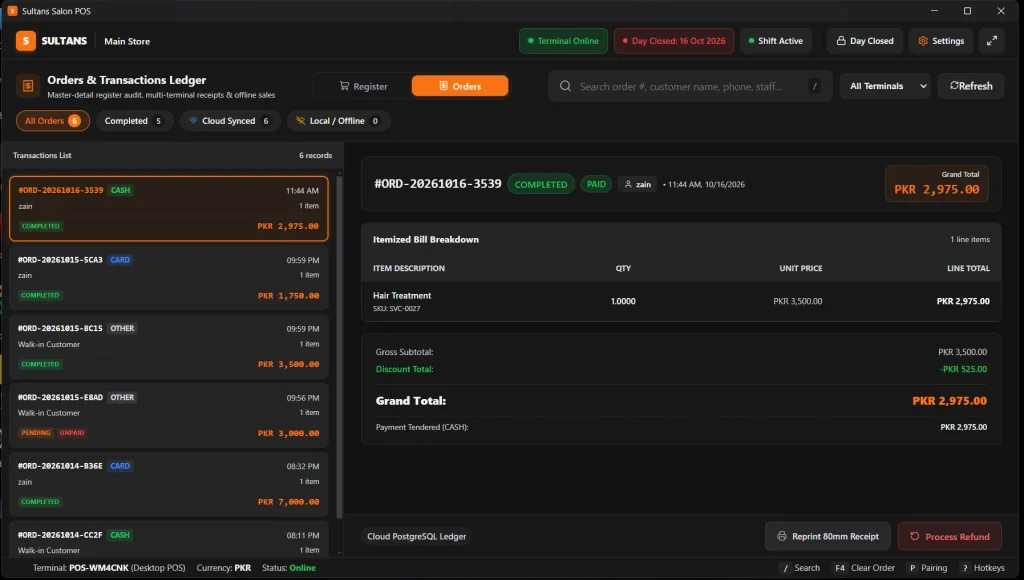
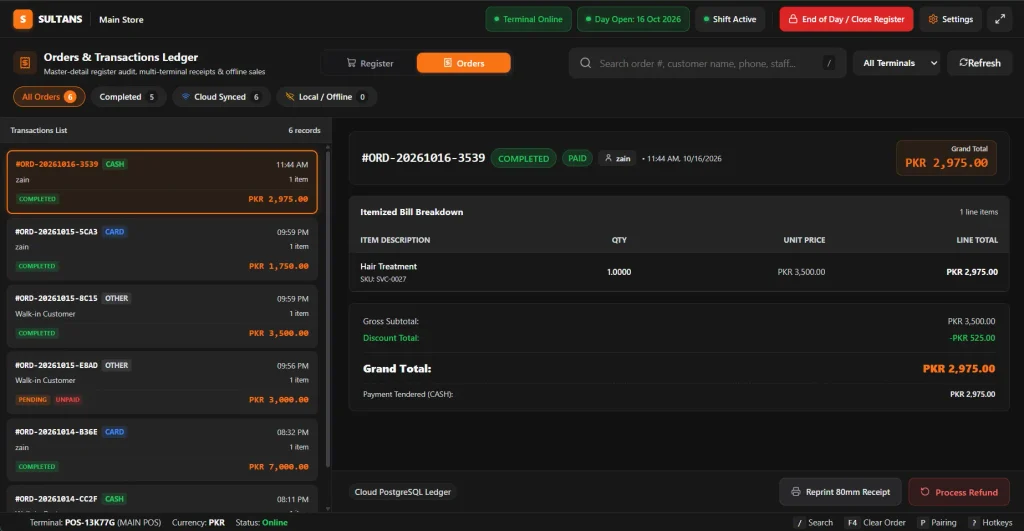
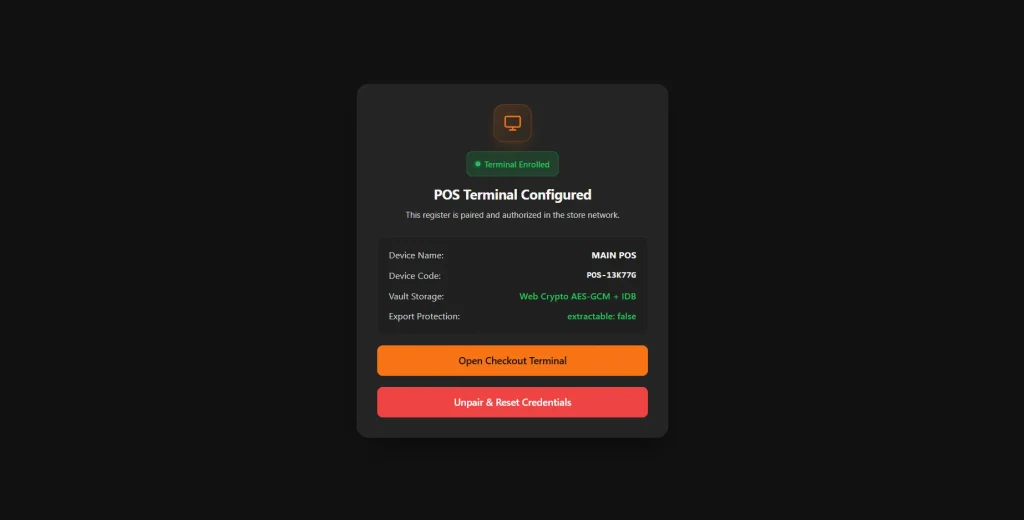
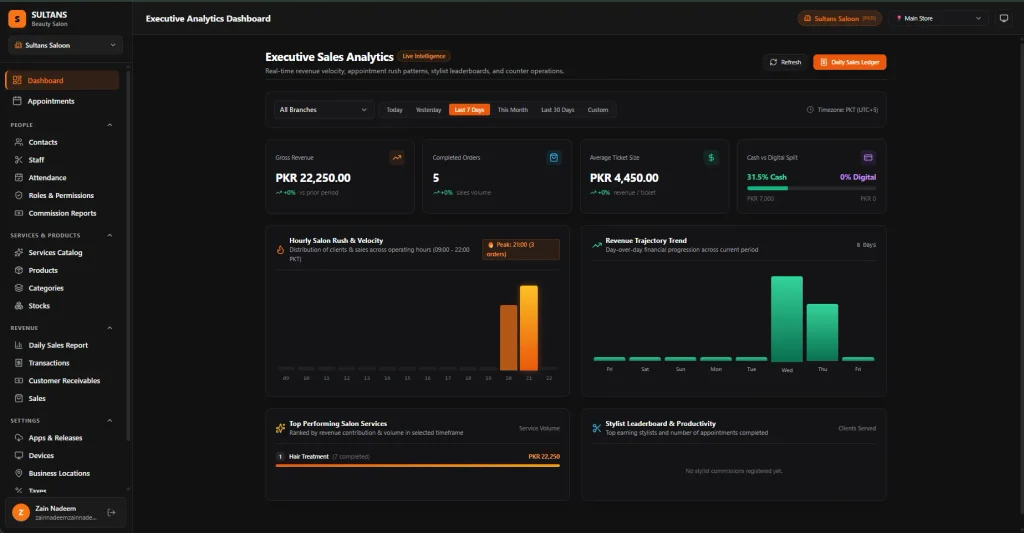
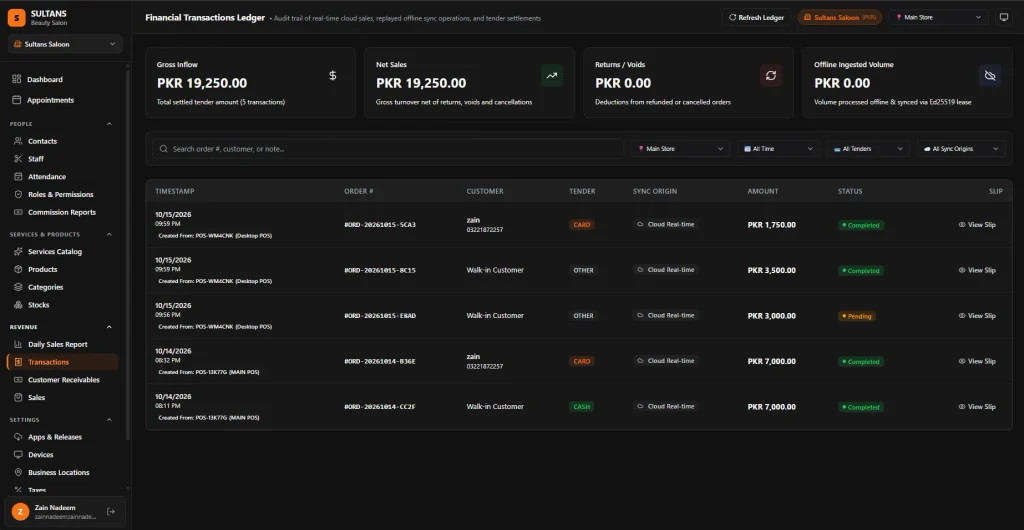
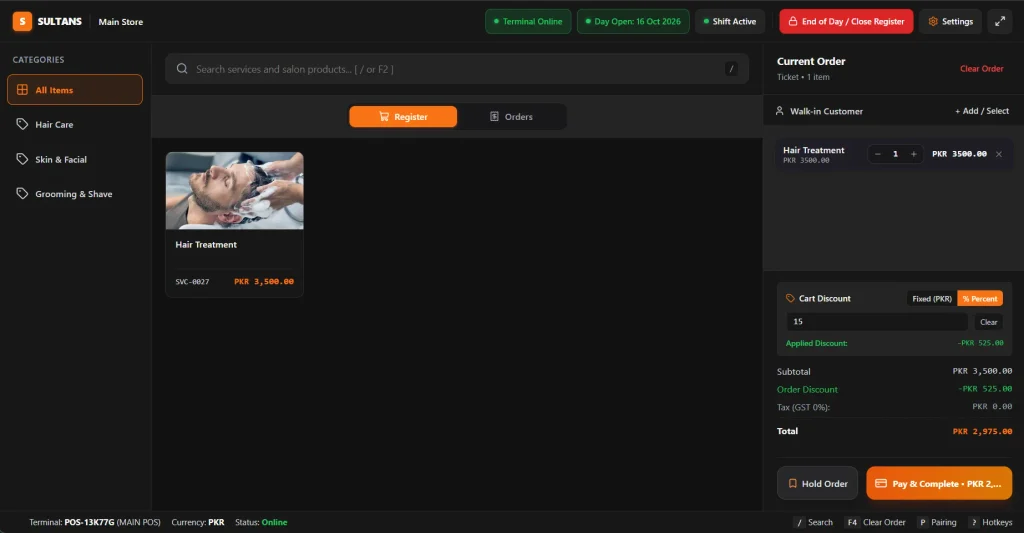
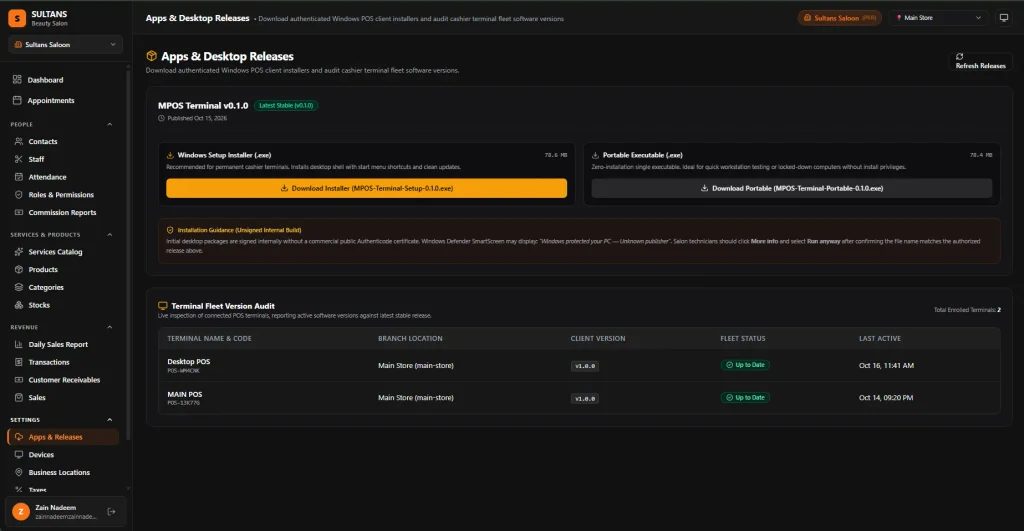
Project Profile: The Sultan Saloon POS System
- Client Enterprise: Sultan Saloon
- Location: Sheikhupura, Punjab, Pakistan
- System Category: Customized Point of Sale and Retail Management System
- Lead Engineer: Sir Zain Nadeem, Senior Software Developer and Contributor at Alkasim
- Engineering Group: Python development team at Alkasim
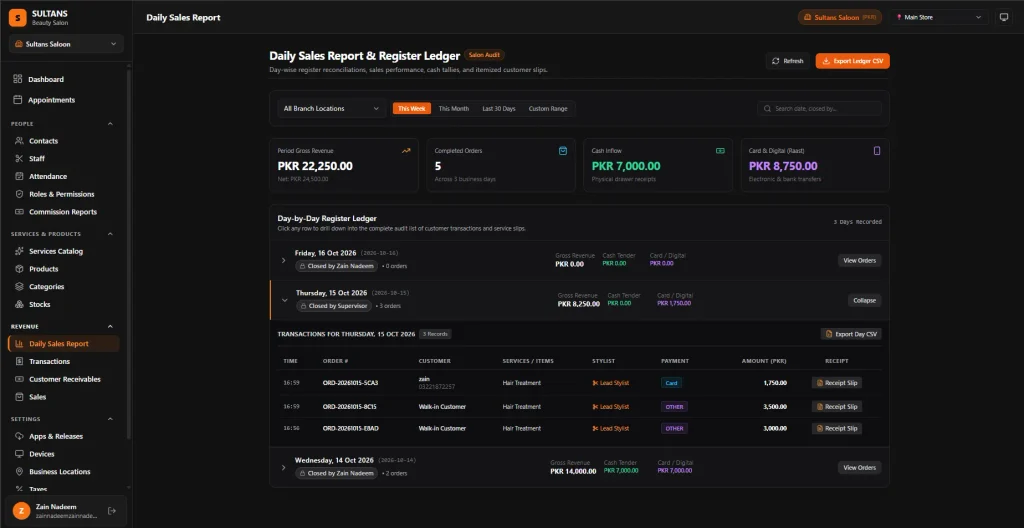
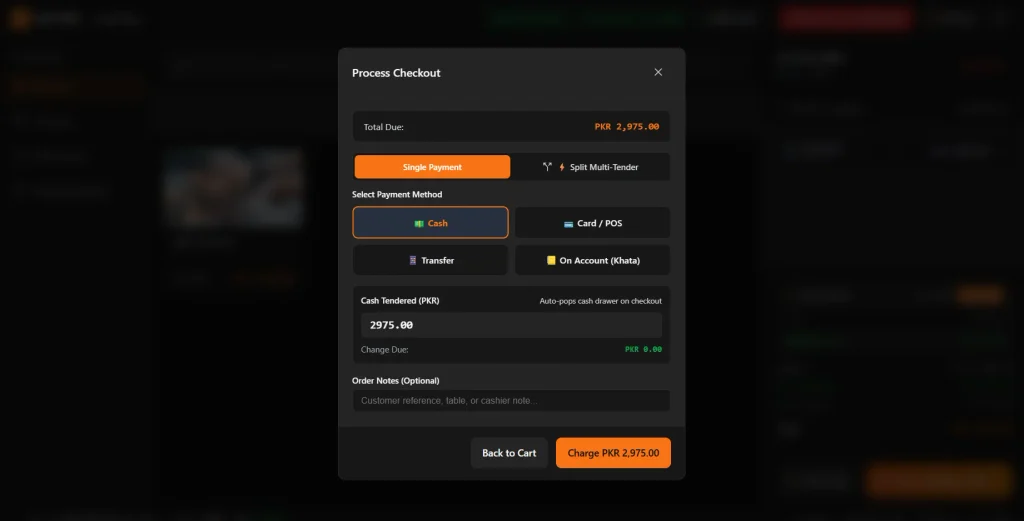
- Primary Objectives: Automate service invoicing, track hair and skin product retail stock, calculate stylist commissions, and produce automated daily revenue audits
The Sultan Saloon deployment represented a vital turning point. It proved to local business owners that dependable, custom software could be built and supported right inside Sheikhupura without paying exorbitant fees to software houses in Lahore or Islamabad.
Inside the Sultan Saloon Deployment: Solving Real Salon Challenges
A busy salon such as Sultan Saloon presents unique operational complexities. On peak days, dozens of clients receive various personal grooming services, while retail products like hair creams, styling waxes, and skin treatments are purchased at the counter.
Before implementing customized digital software, managing this environment with handwritten ledgers created persistent problems:
Operational Challenges at Sultan Saloon
- Manual calculation of receipts during busy rushes created calculation mistakes and customer wait times.
- Stock counts for retail grooming products on shelves were difficult to track accurately, leading to unexpected shortages.
- Calculating daily or weekly service commissions for multiple stylists from paper notes was slow and caused accounting disputes.
- Closing accounts at the end of the day required tedious manual cash counting against paper slips.
Custom POS Software Solutions
- A fast, touch friendly billing screen allows staff to select services, ring up products, and print thermal receipts in seconds.
- Real time inventory tracking automatically updates product counts after every sale and alerts managers to reorder low stock.
- Automated service assignment logs which stylist performed each treatment, instantly updating commission records without error.
- One click reporting generates daily, weekly, and monthly revenue summaries categorized by payment type and service line.
By tailoring the system specifically to the salon’s daily workflow, Alkasim provided an accessible solution that staff could operate with minimal training.
Who Is Sir Zain Nadeem and What Was His Role?
Behind any functional software system is an engineer who translates business concepts into dependable code. In the narrative of Alkasim’s first commercial milestone, that lead role was fulfilled by Sir Zain Nadeem.
Sir Zain Nadeem
Senior Software Developer and Contributor at AlkasimSir Zain Nadeem is a senior software engineer working within Alkasim’s Python development team. He architected, coded, tested, and completed the Sultan Saloon Point of Sale project. Beyond commercial software production, he contributes actively to Alkasim’s educational ecosystem, mentoring aspiring programmers in clean code standards and database reliability.
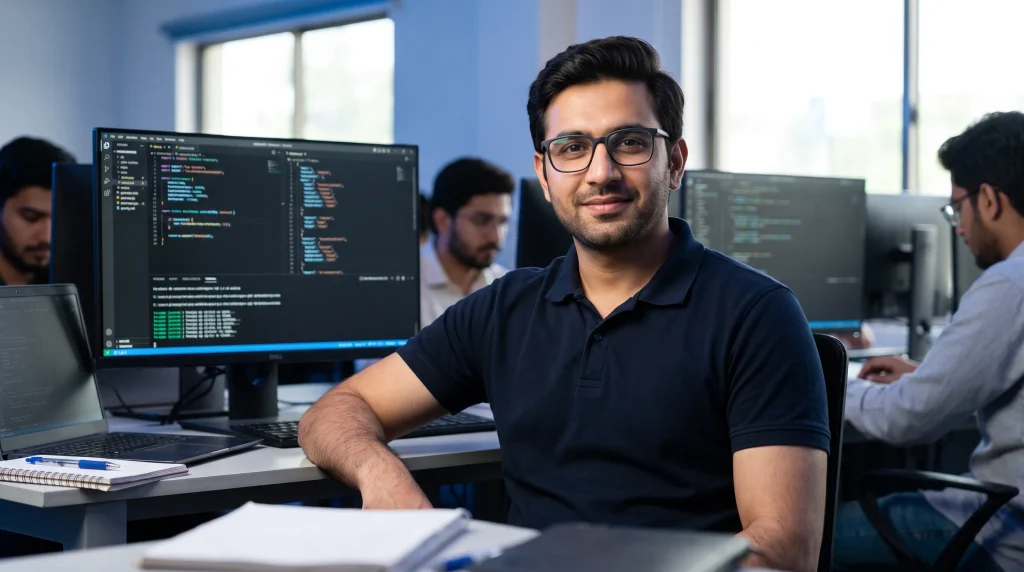
Sir Zain Nadeem’s involvement highlights a key difference between Alkasim and typical computer academies. In most local institutes, teachers are recent graduates who have never built software used by paying clients. At Alkasim, learners interact directly with senior developers like Sir Zain Nadeem who actively build and deploy commercial applications.
How Students Benefit from Live Client Projects
When students participate in real commercial projects rather than synthetic classroom drills, the educational results are transformative:
Practical Problem Solving
Students learn to handle messy real world data, validate user inputs, prevent duplicate invoice entries, and optimize database queries for rapid checkout performance.
Collaborative Engineering Workflows
Learners gain hands on experience with version control systems like Git and GitHub, code review processes, and modular development within professional teams.
Verifiable Project Portfolios
Rather than presenting a generic paper certificate, Alkasim graduates can demonstrate working software deployments, explaining their specific modular contributions to prospective employers.
Understanding Client Requirements
Students discover that writing code is only part of the job; satisfying client needs, handling feedback, and delivering on schedule are equally vital for career success.
Understanding the Practical Earning Horizon
In analyzing student earning prospects, Infolopia maintains strict journalistic realism. Some training centres across Pakistan make exaggerated claims, promising guaranteed monthly salaries to anyone who enrolls. Alkasim does not make such reckless guarantees.
At Alkasim, the principle is explicit: participating in live projects provides earning opportunities based on merit, not an unconditional or legally guaranteed stipend.
When students prove their competence, discipline, and attention to detail, senior developers can assign them modular components within active client contracts. Students who deliver billable work meeting commercial standards participate in project compensation. Income is a reward for demonstrated skill, not a bonus for class attendance.
Side by Side Comparison: Traditional Academies Versus Alkasim
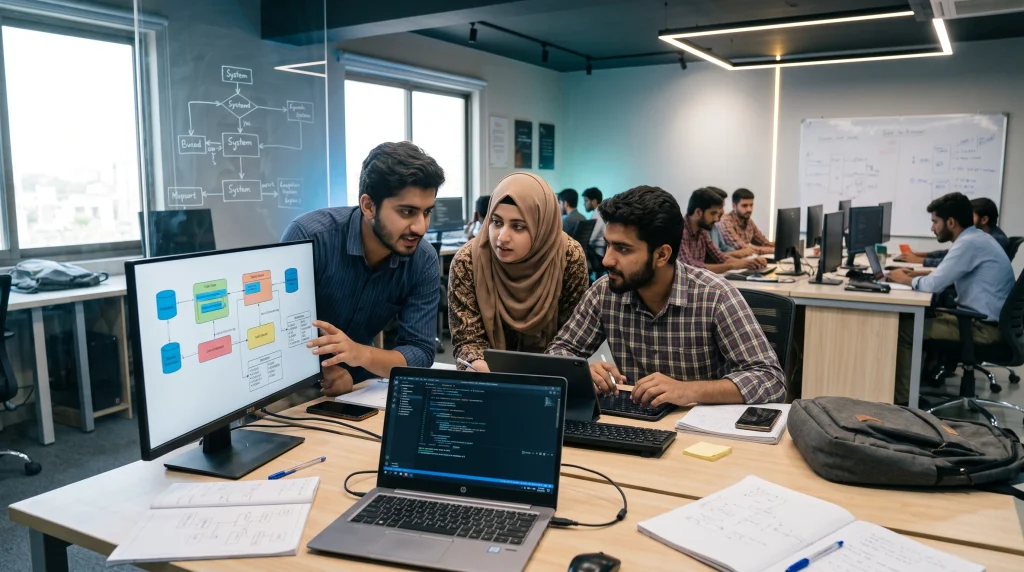
To summarize how Alkasim differs from conventional vocational training in Sheikhupura, Infolopia compiled this side by side comparison:
| Operational Feature | Conventional Computer Academy | Alkasim Project Based Model |
|---|---|---|
| Primary Revenue | Relies almost exclusively on student tuition fees for overhead and profit. | Generates primary income from client software, web engineering, and freelancing. |
| Course Fee Level | Full commercial rates, frequently 10,000 to 25,000 PKR or more. | Offered at roughly 50 percent lower fees to promote accessibility. |
| Use of Student Fees | Retained largely as company profit and promotional advertising costs. | Distributed directly to teachers and reinvested in paid professional tools. |
| Developer Tools | Students often use cracked software, pirated copies, or limited trials. | Legitimate, paid commercial tools are provided without extra student charges. |
| Instructor Background | Often academic teachers with limited or no commercial software experience. | Senior practicing developers like Sir Zain Nadeem who actively deploy software. |
| Practical Training | Synthetic, toy exercises with no real users or commercial consequence. | Real commercial codebases like the Sultan Saloon POS system solving business needs. |
| Student Earning | Rarely provides any earning bridge; graduates navigate marketplaces alone. | Capable students may participate in paid modular client project assignments. |
| Core Philosophy | Educational consumerism where students pay fees in exchange for lectures. | Practical apprenticeship incubator preparing developers for real world markets. |
The Technology Stack and Essential Realities for Students
Alkasim focuses its technical curriculum around technologies with proven commercial and freelance utility:
- Python Development: As the core language of Alkasim’s development team, Python provides clean syntax for beginners alongside immense power for backend web services, data automation, and desktop business applications.
- Full Stack Web Engineering: Students learn semantic HTML, modern styling, interactive JavaScript, relational database management, and cloud deployment techniques.
- Business Transaction Systems: Learners explore transactional security, database normalization, and user interface simplicity essential for Point of Sale software.
Crucial Reality Checks Before Enrolling
1. Affordable fees do not mean easy coursework. Learning to code demands sustained concentration, extensive typing practice, and perseverance through difficult debugging challenges.
2. Earning opportunities require proven merit. Client software demands reliability, and senior developers only assign project components to students who write clean, dependable code.
3. There are no instant shortcuts in software engineering. Mastery requires regular attendance, active curiosity, and hours of personal practice outside classroom sessions.
The Verdict: An Innovative Blueprint for Regional Technical Education
Infolopia’s investigation into Alkasim reveals an educational model designed specifically for the economic realities of Pakistan. By funding its operations through commercial software development, freelancing contracts, and web services, Alkasim frees itself from the tuition trap that hampers conventional academies.
Offering courses at roughly 50 percent lower fees, reinvesting those funds into instructors and legitimate developer tools, and training students on live commercial systems like the Sultan Saloon POS software establishes a sustainable formula. For young individuals in Sheikhupura seeking real world capabilities rather than ornamental certificates, Alkasim presents a compelling, practical path into the modern technology economy.
Frequently Asked Questions: Infolopia Analysis
01 Why is Alkasim considered different from other institutes in Sheikhupura? +
Alkasim is distinct because it is not merely a classroom tuition business. While other academies rely entirely on student fees for survival, Alkasim operates an active software agency. It earns its primary income by developing real software, websites, and freelance projects for commercial clients, enabling it to offer courses at roughly 50 percent lower fees and train students on live production systems.
02 How does Alkasim sustain operations while charging approximately 50 percent lower fees? +
Alkasim decouples its corporate overhead from student tuition. Its facilities, workstations, and operational costs are supported through client software development contracts, web engineering services, and international freelancing revenues. Course fees are kept modest because the institute does not depend on students for company profit.
03 What is the main source of income of Alkasim? +
The main source of income of Alkasim is commercial technology services. This includes four key activities: live project hunting to acquire business clients, international freelancing services, commercial website development, and custom enterprise software development.
04 What happens to the course fees collected from students? +
Fees collected from students are reinvested directly into the educational process. The funds are distributed to working instructors to compensate their mentorship, and they are used to buy legitimate commercial development tools and resources for student use without extra charges.
05 Which was the first live project completed by Alkasim in Sheikhupura? +
Alkasim’s first live commercial project in Sheikhupura was a customized Point of Sale system developed for Sultan Saloon. It automated billing, retail stock tracking, stylist commissions, and daily financial reporting.
06 Who is Sir Zain Nadeem and what was his role in the first project? +
Sir Zain Nadeem is a senior software developer and contributor at Alkasim who works within its Python development division. He completed the Sultan Saloon Point of Sale project, guiding it through architecture, development, and on site deployment while mentoring students.
07 Can students earn money while studying at Alkasim? +
Yes, qualified students have opportunities to earn money by participating in live commercial client projects. However, these opportunities are awarded based on demonstrated skill, punctuality, and code quality, rather than an automatic or guaranteed salary.
08 What does POS stand for and why is it important? +
POS stands for Point of Sale. It is the computerized system used by retail businesses to record sales, handle customer checkouts, print receipts, track inventory, and calculate revenue, serving as an ideal practical project for programming students.
09 Why does Alkasim emphasize Python in its curriculum? +
Python is clean and readable for beginners while offering immense versatility for senior engineers building desktop business tools, web backends, database scripts, and automated workflows.
10 How can interested individuals learn more about Alkasim? +
Students, parents, and local business owners can visit the official Alkasim portal at https://alkasim.pro/ or visit the campus in Sheikhupura to consult with instructors and tour the software development labs.