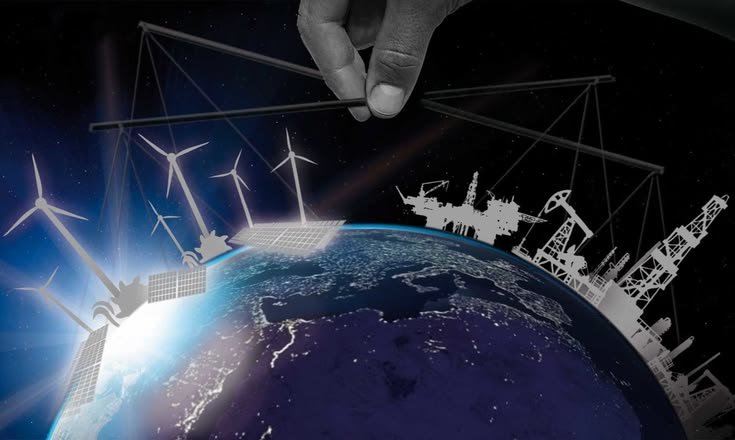
Climate Change as a Geopolitical Challenge | Global Security 2026
Description: Discover how climate change is becoming a major geopolitical challenge through water scarcity, migration, food security, critical minerals, energy competition and global instability.
Primary Keyword: climate change geopolitical challenge
Secondary Keywords:
- climate change and geopolitics
- climate change and global security
- climate security
- climate change and international relations
- climate migration
- water scarcity and geopolitics
- climate change and conflict
- climate change economic impact
- energy security and climate change
- critical minerals geopolitics
- climate change global politics
- environmental security
- climate diplomacy
- climate change and national security
- future of climate geopolitics
Introduction: Climate Change Is No Longer Just an Environmental Problem
For decades, climate change was primarily discussed as an environmental issue.
Today, that picture is changing.
Climate change is increasingly becoming a question of national security, economic power, migration, energy, food, water and international relations.
Extreme heat, droughts, floods, rising sea levels and changing weather patterns can damage economies and infrastructure, disrupt food production and place additional pressure on governments and communities.
The geopolitical consequences can extend even further.
Countries may compete over water and natural resources. Governments may become increasingly concerned about food and energy security. Climate-related displacement can create pressure on neighbouring states. Meanwhile, the global transition away from fossil fuels is increasing demand for critical minerals such as lithium, copper, cobalt, nickel and rare earth elements.
The United Nations describes climate change as a threat multiplier because it can worsen existing social, economic and political vulnerabilities rather than independently causing conflict.
At the same time, NATO has identified climate change as a major security challenge because extreme weather, resource pressures, infrastructure vulnerabilities and changing strategic conditions can affect military operations and broader security.
This raises an important question:
Could climate change become one of the defining geopolitical challenges of the twenty-first century?
The answer depends on how governments respond, but its influence on international politics is already becoming increasingly visible.
Featured Snippet: How Is Climate Change a Geopolitical Challenge?
Climate change is a geopolitical challenge because it can affect water availability, food security, migration, energy supplies, economic stability, critical infrastructure and access to strategic resources. It can also intensify existing tensions between countries and increase competition over land, water and critical minerals.
Climate change does not automatically cause wars or international conflicts. Instead, the UN describes it as a threat multiplier that can worsen existing vulnerabilities and tensions.
1. From Climate Crisis to Geopolitical Crisis
The first major change is the way governments understand climate change.
Previously, climate policy was often treated primarily as a question of reducing greenhouse-gas emissions.
Today, governments increasingly have to consider how changing environmental conditions could affect national interests.
Climate change can influence:
- National security
- Agriculture
- Water resources
- Energy systems
- Trade
- Infrastructure
- Migration
- Public health
- Military operations
- Economic development
This means climate policy is increasingly connected to foreign policy.
A country dealing with severe drought, for example, may experience agricultural losses that increase food imports. Rising food-import dependence can then affect trade relationships, inflation and political stability.
The environmental problem can therefore become an economic and geopolitical problem.
2. Water Scarcity Could Become a Major Geopolitical Issue
Water is one of the most important resources affected by climate change.
Changing rainfall patterns, droughts, melting glaciers and rising temperatures can place additional pressure on freshwater supplies.
This is particularly important in regions where rivers cross national borders.
Countries sharing river systems may need to cooperate over:
- Water allocation
- Dams
- Hydropower
- Agriculture
- Drinking water
- Flood management
- Irrigation
When water becomes scarce, existing political tensions can become more difficult to manage.
However, water scarcity does not automatically produce conflict.
It can also encourage cooperation.
Shared water resources can create incentives for countries to negotiate agreements and develop joint management systems.
The geopolitical question is therefore not simply who controls water, but whether countries can build effective mechanisms for managing increasingly stressed resources.
3. Climate Change and Food Security
Food security is another major connection between climate change and geopolitics.
Agriculture depends heavily on predictable temperatures, rainfall and water availability.
Extreme heat, droughts and floods can damage crops and livestock.
When food production falls, countries may become more dependent on imports.
This can affect global food markets.
The consequences can spread internationally because major agricultural exporters influence food prices and global supply.
Climate-related agricultural disruptions can therefore affect countries far beyond the region experiencing the original environmental shock.
For governments, this creates a new strategic priority:
Food security is increasingly connected to climate security.
4. Climate Migration and Geopolitical Pressure
One of the most discussed consequences of climate change is human displacement.
People may be forced to move because of:
- Flooding
- Drought
- Sea-level rise
- Extreme heat
- Agricultural losses
- Water shortages
- Destruction caused by extreme weather
Climate change does not mean that every person affected by a disaster becomes a climate migrant.
Migration decisions are usually influenced by several factors, including economic conditions, conflict, employment, political stability and access to services.
Nevertheless, climate pressures can make existing vulnerabilities worse.
The UN notes that climate impacts can contribute to displacement and humanitarian crises, particularly in countries already experiencing conflict or instability.
This makes migration an increasingly important part of international discussions about climate security.
5. The Global South Faces Major Geopolitical Risks
Climate change does not affect every country equally.
Many developing countries have contributed relatively little to historical greenhouse-gas emissions but face significant exposure to climate-related risks.
Countries in parts of:
- Africa
- South Asia
- Southeast Asia
- Latin America
- Small island states
can face serious challenges involving extreme weather, agriculture, water and infrastructure.
This creates an important issue in international diplomacy:
Who should pay for climate adaptation and recovery?
Developing countries have increasingly called for greater international financing for adaptation, resilience and loss and damage.
Climate diplomacy is therefore becoming connected to broader debates about development, inequality and global governance.
6. Climate Change Is Changing Energy Geopolitics
The global energy system is undergoing a major transformation.
For decades, international energy politics was heavily influenced by oil and natural gas.
The transition toward renewable energy is changing the strategic importance of different resources.
Solar panels, wind turbines, batteries, electric vehicles and electricity networks require large quantities of minerals and metals.
These include:
- Lithium
- Copper
- Nickel
- Cobalt
- Graphite
- Rare earth elements
The International Energy Agency’s Global Critical Minerals Outlook 2026 describes critical minerals as increasingly important to energy security, economic security, advanced manufacturing, AI, aerospace and defence.
This means the green transition is not removing geopolitics from energy.
It is changing the resources around which geopolitical competition can develop.
7. Critical Minerals Are Becoming the New Strategic Resources
The transition to clean energy requires minerals.
Lithium is important for batteries.
Copper is essential for electricity networks.
Rare earth elements are used in technologies including permanent magnets for wind turbines and electric motors.
As demand increases, countries are becoming more concerned about where these resources are mined, processed and transported.
The IEA has warned that supply concentration and export restrictions create vulnerabilities in critical-mineral supply chains.
The United Nations has similarly highlighted concerns about whether mineral extraction can be managed in ways that support sustainable development while avoiding environmental damage, human-rights problems and geopolitical tensions.
This creates a new strategic question:
Who controls the resources needed for the clean-energy economy?
8. Climate Change and National Security
Climate change is increasingly being incorporated into national security planning.
Military organizations must prepare for environments involving:
- Extreme heat
- Flooding
- Rising sea levels
- Water shortages
- Damaged infrastructure
- Disrupted supply routes
- Energy insecurity
- Natural disasters
NATO has explicitly incorporated climate considerations into defence planning, military capabilities, infrastructure, resilience and disaster response.
For militaries, climate change can affect even basic operations.
Extreme temperatures can place additional stress on equipment and personnel, while floods and storms can damage bases, roads and transport networks.
Climate change therefore affects not only the environment in which militaries operate but also the infrastructure supporting them.
9. The Arctic Is Becoming More Geopolitically Important
One of the clearest examples of the relationship between climate change and geopolitics is the Arctic.
The Arctic is warming rapidly compared with many other parts of the planet.
As sea ice decreases, previously difficult maritime routes may become more accessible for longer periods.
Climate change is therefore interacting with questions involving:
- Shipping routes
- Natural resources
- Military presence
- Territorial claims
- Infrastructure
- Strategic competition
NATO identifies the High North as an important area of climate-related strategic change, noting that melting sea ice and changing conditions can affect the security environment.
The Arctic demonstrates how an environmental transformation can also become a strategic transformation.
10. Climate Change Can Increase Political Instability
Climate change does not directly cause every conflict.
This distinction is important.
A drought alone does not automatically produce war.
However, climate pressures can interact with existing problems such as:
- Poverty
- Weak institutions
- Political instability
- Conflict
- Inequality
- Resource competition
- Food insecurity
The UN describes climate change as a threat multiplier because these pressures can reinforce one another.
This is particularly important in fragile states where governments may have limited capacity to respond to disasters.
A climate shock can therefore make an existing crisis more difficult to manage.
11. Climate Change and Global Trade
International trade also depends on a stable climate.
Ports, roads, railways, farms, factories and supply chains can all be affected by extreme weather.
A major flood can disrupt transportation.
A drought can reduce agricultural exports.
A heatwave can affect electricity demand and industrial production.
As climate risks increase, companies and governments are increasingly considering the resilience of supply chains.
This could encourage businesses to diversify suppliers and governments to develop strategic reserves of important goods.
Climate resilience is therefore becoming part of economic security.
12. Climate Change Is Creating New Diplomatic Alliances
Climate change can also create opportunities for international cooperation.
Countries can work together on:
- Renewable energy
- Climate finance
- Disaster preparedness
- Water management
- Food security
- Technology
- Carbon reduction
- Adaptation
- Critical-mineral supply chains
International climate negotiations provide a diplomatic platform for countries with very different political interests.
Climate diplomacy can therefore become an area where countries compete, negotiate and cooperate at the same time.
13. Climate Diplomacy and the Global Power Balance
Climate policy is also becoming part of international competition.
Countries that lead in renewable technologies, batteries, electric vehicles, artificial intelligence and clean-energy manufacturing can gain economic advantages.
At the same time, countries rich in critical minerals may gain greater strategic importance.
This creates a changing global economic landscape.
The countries that dominate the energy technologies of the future may have significant influence over global supply chains.
Climate change is therefore not only about reducing emissions.
It is increasingly about who will shape the economy of the future.
14. The Economic Cost of Climate Change
Climate change can impose enormous economic costs through:
- Damage to infrastructure
- Agricultural losses
- Health impacts
- Disaster recovery
- Reduced productivity
- Supply-chain disruption
- Rising insurance costs
- Relocation of communities
Poorer countries often have fewer financial resources to adapt.
This creates another geopolitical challenge.
International financial institutions and wealthier countries face growing pressure to support climate adaptation and resilience in vulnerable states.
Climate finance is therefore becoming part of the broader relationship between developed and developing countries.
15. Climate Change Could Reshape International Security Institutions
Traditional security institutions were largely designed around military threats.
But climate change requires a broader understanding of security.
The UN established its Climate Security Mechanism in 2018 to help integrate climate-related risks into conflict prevention and peacebuilding efforts.
NATO has also developed a climate-security agenda.
These developments show that climate change is increasingly being incorporated into international security planning.
The future may therefore involve greater cooperation between:
- Environmental organizations
- Defence institutions
- Humanitarian agencies
- Development organizations
- Financial institutions
- National governments
16. The New Geopolitical Map of Climate Change
Climate change could influence the global balance of power in several ways.
Countries With Critical Minerals
Countries with large reserves of lithium, copper, cobalt and rare earth elements could gain strategic importance.
Countries With Renewable Technology
Countries leading in solar, batteries, electric vehicles and other technologies may gain economic influence.
Countries Vulnerable to Climate Change
Highly vulnerable countries may seek greater international support and stronger climate diplomacy.
Major Energy Producers
Oil and gas producers may need to adapt their economies as the global energy system changes.
Arctic States
Countries with territory or strategic interests in the Arctic may face increasing competition over emerging routes and resources.
The geopolitical map of the future could therefore be shaped not only by military power but also by climate vulnerability, energy technology and resource availability.
17. What Will Climate Geopolitics Look Like in the Future?
Several developments are likely to remain important.
Greater Competition Over Resources
Water, minerals, food and energy may become increasingly strategic.
Stronger Climate Diplomacy
Countries will continue negotiating over emissions, finance, adaptation and technology.
More Climate-Related Migration
Displacement pressures may increase where climate impacts interact with poverty, conflict and weak infrastructure.
Greater Focus on Resilience
Governments will increasingly invest in climate-resistant infrastructure and supply chains.
Competition Over Green Technology
Solar power, batteries, electric vehicles, hydrogen and other technologies may become important areas of economic competition.
These trends do not guarantee geopolitical conflict.
They indicate that climate considerations are becoming increasingly important in how countries plan for economic and national security.
Featured Snippet: Why Is Climate Change Important for Geopolitics?
Climate change matters for geopolitics because it affects resources, economies, migration, food production, energy systems and national security. It can increase pressure on already vulnerable countries and create competition over water, land, minerals and energy.
At the same time, climate cooperation can create opportunities for diplomacy and international collaboration.
Frequently Asked Questions
Is climate change a geopolitical issue?
Yes. Climate change increasingly affects international security, economic relationships, migration, energy policy, resource competition and diplomatic relations.
How does climate change affect national security?
Extreme weather, water scarcity, damaged infrastructure, food insecurity and resource pressures can affect government stability, military operations and national resilience. NATO explicitly incorporates climate considerations into security planning.
Can climate change cause war?
Climate change does not automatically cause war. Instead, it can act as a threat multiplier, worsening existing political, economic and social vulnerabilities.
Why are critical minerals important?
Critical minerals such as lithium, copper, nickel, cobalt and rare earth elements are essential to many clean-energy and high-technology industries. Their supply chains are therefore becoming strategically important.
How does climate change affect migration?
Extreme weather, water stress, agricultural losses and declining livelihoods can contribute to displacement, particularly where communities are already vulnerable to conflict or economic instability.
Why is the Arctic becoming geopolitically important?
Climate change is reducing sea ice and changing physical conditions in the Arctic, potentially affecting shipping, infrastructure, natural resources and strategic competition. NATO identifies the High North as an important climate-security region.
Conclusion: Climate Change Is Reshaping Global Power
Climate change is no longer simply a question of rising temperatures and environmental protection.
It is increasingly becoming a geopolitical challenge.
Water scarcity can affect relations between neighbouring countries. Climate-related disasters can increase humanitarian pressures. Extreme weather can disrupt economies and supply chains. Migration can create political challenges. Meanwhile, the transition to clean energy is increasing competition over critical minerals and advanced technologies.
The countries that adapt successfully to these changes may strengthen their economic and strategic resilience.
Those that remain highly vulnerable may face increasing pressure from environmental, economic and social disruptions.
But climate change does not have to become a source of permanent geopolitical conflict.
International cooperation can turn shared vulnerabilities into opportunities for diplomacy.
Countries can cooperate over water, invest in resilient infrastructure, diversify critical-mineral supply chains, develop clean-energy technologies and support vulnerable communities.
The central geopolitical question of the climate era may therefore be more than who controls the world’s resources.
It may be:
Who can adapt, cooperate and compete most effectively in a world being reshaped by climate change?
As climate risks continue to influence economics, security and international relations, understanding climate geopolitics will become increasingly important for understanding the future of global power.