Impact of World War II on Today’s World | WWII Legacy
Introduction: Why Does World War II Still Matter Today?
World War II ended more than 80 years ago, but its influence can still be seen in the world we live in today.
From the creation of the United Nations to the emergence of the United States and Soviet Union as global powers, from the development of nuclear weapons to major advances in medicine and technology, World War II transformed international politics and everyday life.
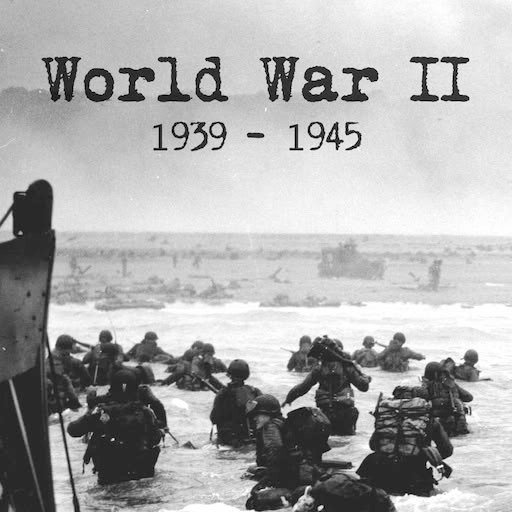
The war lasted from 1939 to 1945 and became the largest armed conflict in history. It involved countries across Europe, Asia, Africa, and the Pacific, while millions of soldiers and civilians lost their lives.
But the significance of World War II cannot be measured only by its battles and casualties.
The war changed international borders, accelerated the end of European colonial empires, influenced the development of international human-rights law, transformed economies, and created the political conditions for the Cold War.
Its consequences also influenced the formation of modern international institutions and the way governments think about diplomacy, national security, war, and peace.
Understanding the impact of World War II on today’s world therefore means understanding how the events of 1939–1945 helped create the political and social landscape of the twenty-first century.
What Was World War II?
World War II was a global conflict that began in Europe in September 1939, when Germany invaded Poland. Britain and France subsequently declared war on Germany.
The conflict expanded rapidly, eventually involving many countries and multiple theaters of war.
The major Allied powers included countries such as the United Kingdom, the Soviet Union, the United States, China, and France. The Axis powers included Germany, Italy, and Japan.
The war ended in Europe in May 1945 after Germany’s surrender and in the Pacific in September 1945 after Japan surrendered.
The United States Holocaust Memorial Museum and the Imperial War Museums provide extensive historical resources about the conflict.
1. World War II Created a New International Order
One of the most important consequences of World War II was the transformation of the international political system.
Before the war, European countries such as Britain and France had enormous global influence through their colonial empires.
After the war, the international balance of power changed significantly.
The United States and Soviet Union emerged as the two dominant superpowers, creating a new global political rivalry.
This rivalry became known as the Cold War, which shaped international relations for much of the second half of the twentieth century.
The political structures created after World War II continue to influence international relations today.
2. The Creation of the United Nations
Perhaps the most recognizable institution created in the aftermath of World War II is the United Nations (UN).
The United Nations officially came into existence in 1945, with the goal of maintaining international peace and security and promoting cooperation among countries.
The organization emerged partly from the lessons of two devastating world wars and the failure of the earlier League of Nations to prevent another major conflict.
According to the United Nations, representatives from 50 countries gathered in San Francisco in 1945 to draft the UN Charter.
Today, the UN provides a major forum for international diplomacy and cooperation.
Its work covers areas including:
- International peace and security
- Human rights
- Humanitarian assistance
- Development
- Refugees
- International law
- Global health
- Climate and environmental issues
The creation of the UN is one of the clearest examples of how World War II continues to shape the modern world.
3. The Cold War and Modern Global Politics
World War II fundamentally changed the relationship between major powers.
After the defeat of Nazi Germany, the United States and Soviet Union became ideological and geopolitical rivals.
The United States generally promoted a capitalist and liberal-democratic international order, while the Soviet Union promoted communist political and economic systems.
This rivalry led to the Cold War, which lasted roughly from the late 1940s until the dissolution of the Soviet Union in 1991.
The Cold War affected Europe, Asia, Africa, Latin America, and the Middle East.
It also influenced military alliances, foreign policy, intelligence operations, space exploration, nuclear weapons development, and international economics.
Many international relationships and security structures that exist today have roots in this post-World War II period.
4. World War II Accelerated Decolonization
Another major consequence of World War II was the weakening of European colonial powers.
Britain, France, the Netherlands, and other European powers had suffered enormous economic and military costs during the war.
At the same time, independence movements in Asia, Africa, and the Middle East became increasingly influential.
In the decades after 1945, many countries gained independence.
India and Pakistan, for example, became independent from British rule in 1947.
Across Asia and Africa, dozens of new states emerged during the post-war period.
The end of colonial rule was influenced by many factors, including nationalist movements and local political struggles, but the economic and political changes caused by World War II contributed significantly to the changing global order.
The modern international community—with a much larger number of independent states—was therefore partly shaped by the post-World War II era.
5. The Development of International Human Rights
World War II also transformed global discussions about human rights.
The Holocaust and other atrocities committed during the war demonstrated the catastrophic consequences of state-sponsored persecution, racism, mass murder, and genocide.
After the war, the international community increasingly focused on establishing principles for protecting human dignity.
The Universal Declaration of Human Rights (UDHR) was adopted by the UN General Assembly in 1948.
The United Nations describes the declaration as a foundational document setting out fundamental human rights that should be protected for all people.
The development of international human-rights law continued in the decades that followed.
Today, concepts such as freedom, equality, dignity, and protection from discrimination are central to international human-rights discussions.
6. The Holocaust Changed the World’s Understanding of Genocide
The Holocaust was the systematic persecution and murder of approximately six million Jews by Nazi Germany and its collaborators.
Millions of other people were also persecuted and murdered by the Nazi regime, including Roma and Sinti, people with disabilities, Soviet prisoners of war, political opponents, and others.
The Holocaust fundamentally influenced international discussions about genocide, persecution, discrimination, and crimes against humanity.
The United States Holocaust Memorial Museum provides extensive educational resources documenting the history of the Holocaust.
The term genocide was later incorporated into international law through the 1948 Genocide Convention.
This historical development remains relevant today because international institutions continue to address mass atrocities and the protection of civilian populations.
7. The Rise of Nuclear Weapons
One of the most consequential technological developments associated with World War II was the creation of the atomic bomb.
In August 1945, atomic bombs were used against Hiroshima and Nagasaki in Japan.
The attacks caused enormous loss of life and destruction, and Japan subsequently surrendered.
The development and use of nuclear weapons transformed international security.
After 1945, the United States and Soviet Union developed large nuclear arsenals, creating the possibility that a future conflict could result in catastrophic destruction.
Nuclear weapons remain an important issue in international relations today.
The post-World War II nuclear age has influenced arms-control agreements, military strategies, diplomacy, and debates about global security for decades.
8. World War II Accelerated Technological Development
World War II created enormous pressure to develop new technologies.
Some wartime technologies later influenced civilian life.
Important developments and advancements included:
- Radar
- Aircraft technology
- Computing
- Cryptography
- Nuclear technology
- Medical treatments
- Communication systems
- Rocket technology
Early electronic computers, for example, were developed partly in response to wartime needs.
Military research also contributed to advances in aviation and rocketry, developments that later influenced the space race.
This does not mean that all modern technology originated during World War II. Rather, the war significantly accelerated research in several fields.
9. Medical Advances During and After the War
World War II also affected the development of modern medicine.
The enormous number of wounded soldiers created demand for improvements in surgery, blood transfusion, infection treatment, rehabilitation, and emergency medicine.
Antibiotics, particularly penicillin, became increasingly important during the war.
Large-scale production of penicillin helped make the drug widely available for treating bacterial infections.
The war also contributed to improvements in medical logistics and trauma care.
Some of these advances later benefited civilian healthcare systems.
10. World War II Transformed Global Economies
World War II had a profound impact on the global economy.
Industrial production expanded dramatically in countries mobilized for war.
After 1945, governments faced the enormous challenge of rebuilding damaged cities, industries, transportation networks, and economies.
The United States emerged from the war with a particularly strong economic position compared with many other major industrial powers.
The post-war period also saw the creation and strengthening of international economic institutions.
The International Monetary Fund (IMF) and World Bank were established in the context of the 1944 Bretton Woods Conference.
These institutions became important parts of the post-war international economic system.
11. The Marshall Plan and European Reconstruction
Europe faced enormous destruction after World War II.
Cities, factories, railways, ports, and homes had been damaged or destroyed.
The United States responded with the Marshall Plan, formally known as the European Recovery Program, which provided economic assistance to European countries.
The program aimed to support economic recovery and reconstruction.
The post-war rebuilding of Europe helped establish the foundations for greater economic cooperation among European countries.
Over time, European integration developed through organizations and agreements that eventually contributed to today’s European Union.
12. World War II Changed Women’s Roles
World War II also affected social attitudes toward women’s work.
With large numbers of men serving in the military, women entered factories, offices, transportation, agriculture, healthcare, and other sectors in greater numbers.
Women made essential contributions to wartime economies and military support services.
After the war, many women left jobs they had taken during wartime, while others continued working and used their experiences to challenge traditional expectations.
The war did not single-handedly create modern women’s rights movements, but it contributed to broader social changes surrounding employment, citizenship, and gender roles.
13. The Birth of Modern Refugee and Humanitarian Systems
World War II displaced millions of people.
The scale of the refugee crisis demonstrated the need for stronger international systems to protect displaced populations.
In 1950, the United Nations established the UNHCR, the UN Refugee Agency, to help people displaced by conflict.
The UNHCR continues to work with refugees and displaced people around the world.
Modern refugee protection, humanitarian assistance, and international discussions about displacement are therefore strongly connected to the experiences of the World War II era.
14. World War II Changed International Law
The atrocities committed during World War II led to major developments in international law.
The Nuremberg Trials prosecuted major Nazi officials for crimes committed during the war.
The trials contributed to the development of legal principles concerning individual responsibility for international crimes.
The post-war period also saw important developments related to genocide, war crimes, crimes against humanity, and protections for civilians.
Modern international criminal justice has roots in these developments.
15. The World We Live In Today
Many aspects of today’s world can be connected to the consequences of World War II.
The international system includes institutions that emerged during or after the war.
The global balance of power was transformed.
Many modern countries gained independence during the decades following the conflict.
International human-rights principles became more firmly established.
Nuclear weapons became a central issue in global security.
Technology and medicine developed rapidly.
International economic cooperation expanded.
The effects of World War II therefore reach far beyond history textbooks.
Lessons From World War II for the Modern World
World War II offers several important historical lessons.
Diplomacy Matters
The devastating consequences of global conflict demonstrate the importance of diplomatic mechanisms for resolving disputes.
International Cooperation Matters
The creation of the United Nations reflects an effort to prevent another catastrophic global conflict through international cooperation.
Human Rights Require Protection
The Holocaust and other wartime atrocities demonstrated the consequences of unchecked persecution and mass violence.
Technology Has Two Sides
Technological progress can improve human life, but the same scientific knowledge can also be used to create destructive weapons.
Peace Requires Long-Term Effort
Ending a war is only the beginning. Rebuilding economies, institutions, communities, and relationships can take decades.
Frequently Asked Questions
When did World War II begin and end?
World War II began in 1939 and ended in 1945.
What was the biggest impact of World War II?
World War II transformed the global political order, contributed to the creation of the United Nations, accelerated decolonization, influenced international human-rights law, created the conditions for the Cold War, and accelerated technological and economic changes.
How did World War II lead to the United Nations?
The destruction caused by two world wars encouraged governments to create stronger international mechanisms for maintaining peace and cooperation. The United Nations was officially established in 1945.
How did World War II affect technology?
The war accelerated research in areas such as radar, computing, aviation, rocketry, nuclear technology, and communications.
How did World War II affect human rights?
The Holocaust and other wartime atrocities contributed to increased international efforts to establish and protect universal human rights, including the adoption of the Universal Declaration of Human Rights in 1948.
Why is World War II still important today?
Many modern political institutions, international relationships, borders, security arrangements, technological developments, and human-rights frameworks have roots in the events and aftermath of World War II.
Conclusion: The War That Shaped the Modern World
World War II was not simply a conflict between armies. It was an event that transformed the political, economic, technological, and social structure of the world.
Its aftermath produced a new international order, including the United Nations, new approaches to human rights and international law, a transformed global economy, and a new balance of power dominated by the United States and Soviet Union.
The war also accelerated decolonization, changed women’s roles, influenced modern medicine and technology, and introduced the world to the nuclear age.
More than eight decades later, its legacy remains visible.
Studying World War II is therefore not only about understanding what happened between 1939 and 1945. It is about understanding why today’s world looks the way it does.
The borders on maps, international institutions, global alliances, human-rights principles, technological developments, and debates about nuclear security all carry traces of the Second World War.
History cannot be changed, but it can be studied.
And understanding the consequences of World War II can help societies recognize the enormous cost of global conflict and the continuing importance of diplomacy, cooperation, human dignity, and peace.