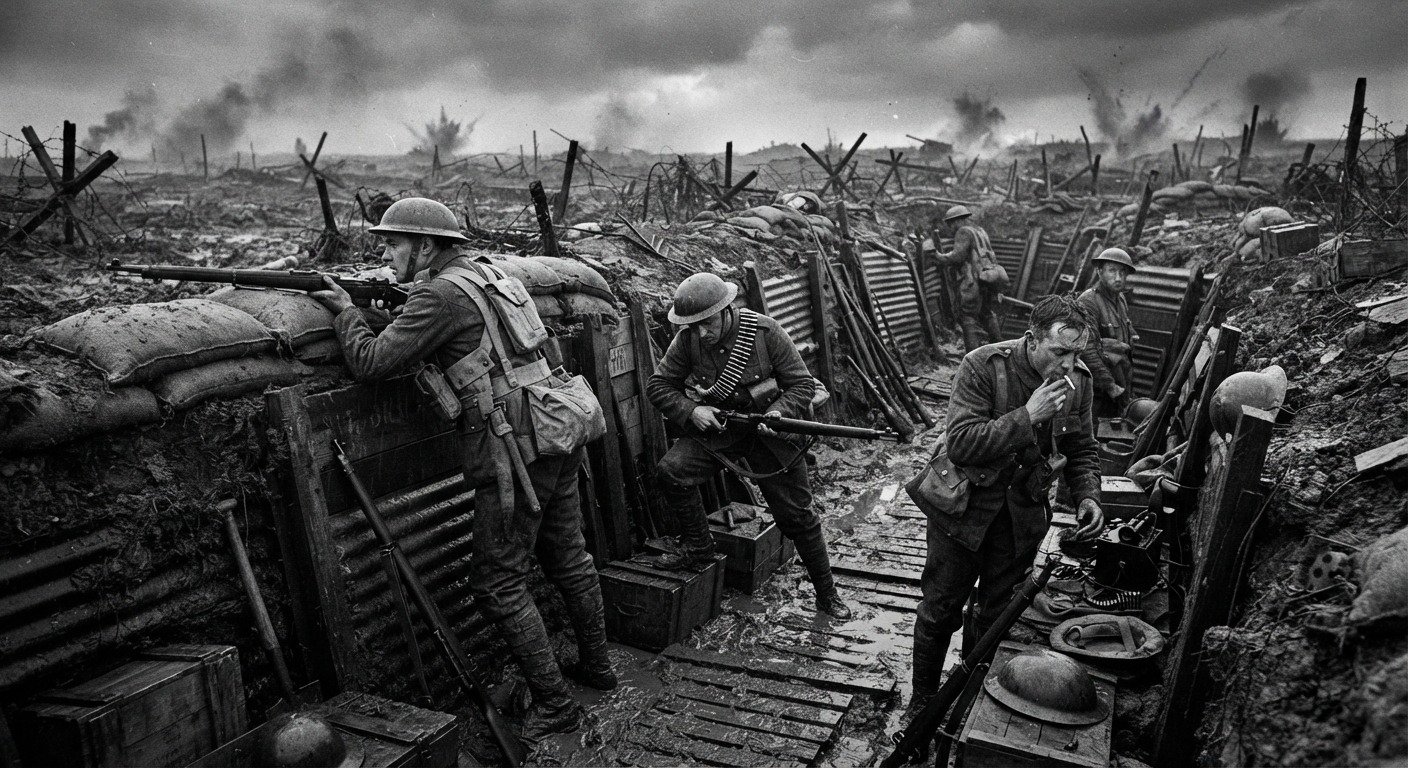
How the Great War Still Shapes Our Lives
Introduction: Why Does World War I Still Matter Today?
More than a century has passed since World War I ended, but its influence can still be seen in the world around us.
The First World War was fought from 1914 to 1918 and involved major powers from Europe and other parts of the world. Millions of soldiers and civilians lost their lives, while entire empires collapsed and political borders were redrawn.
At first glance, World War I may seem like a distant historical event. However, many political institutions, international relationships, national borders, military technologies, and social changes that emerged from the war continue to influence the modern world.
The war did not simply end when the guns fell silent in 1918. Its political and economic consequences helped shape the decades that followed and contributed to the conditions that eventually led to World War II.
Understanding the impact of World War I on today’s world therefore means looking beyond the battlefield. It means understanding how one conflict transformed international politics, societies, economies, technology, and ideas about peace.
What Was World War I?
World War I, also known as the Great War, began in July 1914 and ended with the Armistice of November 11, 1918.
The assassination of Archduke Franz Ferdinand of Austria-Hungary in June 1914 was the immediate trigger, but the conflict had deeper causes, including militarism, alliances, imperial competition, nationalism, and political tensions in Europe.
The war involved two major alliance systems. The Allied Powers included countries such as Britain, France, Russia, and later the United States, while the Central Powers included Germany, Austria-Hungary, the Ottoman Empire, and Bulgaria.
The war became a global conflict, with fighting and political consequences extending beyond Europe.
The Imperial War Museums provides extensive historical material on the causes and development of the First World War.
1. World War I Changed the Political Map of the World
One of the most important effects of World War I was the collapse of several major empires.
The German, Austro-Hungarian, Ottoman, and Russian Empires were transformed or collapsed during and after the war.
New countries emerged, while existing borders were redrawn.
This transformation had consequences that lasted throughout the twentieth century and continue to influence international politics.
The dissolution of the Ottoman Empire, for example, contributed to the creation of a new political order in the Middle East. The post-war settlement created new states and mandates, while some borders and political arrangements remained sources of tension.
This demonstrates one of the most important lessons of World War I: the consequences of war can last much longer than the conflict itself.
2. The Treaty of Versailles and Its Long-Term Consequences
After World War I, the victorious Allied powers negotiated a series of peace settlements.
The most famous was the Treaty of Versailles, signed in 1919 between Germany and the Allied powers.
The treaty imposed significant military, territorial, and financial restrictions on Germany.
The post-war settlement remains controversial among historians because of its relationship to German political instability and the rise of extremist movements during the interwar period.
The United States Office of the Historian provides historical documentation about the Treaty of Versailles and the post-war settlement.
The treaty did not directly “cause” World War II on its own, but the political and economic difficulties of the post-war period helped create an environment in which aggressive nationalism and authoritarian politics could grow.
This is one reason World War I is essential for understanding the history of World War II.
3. The Creation of the League of Nations
One of the most significant attempts to prevent another global war emerged from World War I: the League of Nations.
The League was established in 1920 with the goal of promoting international cooperation and preventing future conflicts.
Although the organization ultimately failed to prevent World War II, it represented an important development in the idea that countries could work together through an international institution rather than relying entirely on military power.
The League’s experience influenced later approaches to international cooperation.
After World War II, the United Nations was created in 1945.
The United Nations describes the League of Nations as an important predecessor to the modern UN system.
The modern international system therefore has an important historical connection to the lessons learned after World War I.
4. World War I Helped Shape Modern International Relations
Before World War I, European powers competed heavily for territory, influence, and colonial possessions.
The war demonstrated how alliances and rivalries could turn a regional crisis into a global conflict.
Today, international relations continue to emphasize diplomacy, alliances, negotiations, and international institutions partly because governments recognize the enormous consequences of uncontrolled escalation.
Modern diplomatic institutions cannot eliminate conflict completely, but they provide mechanisms through which countries can communicate and negotiate.
The basic idea is simple:
Countries are safer when disputes can be addressed through diplomacy before they become wars.
This remains one of the most important lessons associated with World War I.
5. The War Changed the Role of Technology in Conflict
World War I introduced or significantly expanded the use of technologies that transformed modern warfare.
These included:
- Tanks
- Military aircraft
- Submarines
- Machine guns
- Chemical weapons
- Improved artillery
- Radio communication
- Advanced medical technologies
The war demonstrated that industrial technology could make warfare more destructive than ever before.
Mass production allowed armies to deploy huge quantities of weapons and ammunition.
The relationship between technology and warfare has continued to develop since then. Modern conflicts involve drones, cyber operations, satellites, precision weapons, and advanced surveillance systems.
World War I was therefore an important turning point in the history of industrialized warfare.
6. Medical Advances and the Treatment of Soldiers
Although World War I caused enormous suffering, it also accelerated developments in military medicine.
Doctors and nurses faced unprecedented numbers of wounded soldiers.
This created pressure to improve:
- Blood transfusion techniques
- Emergency surgery
- Infection control
- Prosthetic limbs
- Trauma treatment
- Rehabilitation
The experiences of wartime medicine contributed to developments that later benefited civilian healthcare.
The war also increased awareness of the need to treat soldiers who survived with serious physical and psychological injuries.
7. The Psychological Impact of World War I
World War I changed how societies understood the psychological effects of combat.
Many soldiers returned from the trenches suffering from what was then commonly called “shell shock.”
Today, some of the experiences described historically under shell shock are understood in relation to psychological trauma and conditions such as post-traumatic stress disorder (PTSD).
The experiences of World War I helped draw greater attention to the psychological consequences of warfare.
Modern military organizations and healthcare systems now recognize that surviving a war can involve invisible injuries as well as physical ones.
This is an important part of the war’s legacy because it changed the conversation around the mental health of veterans and trauma survivors.
8. World War I Accelerated Social Change
The war dramatically changed everyday life.
With millions of men serving in the military, women entered many workplaces that had previously been dominated by men.
Women worked in factories, transportation, agriculture, hospitals, offices, and other sectors.
The war did not single-handedly create women’s political and social advancement, but it contributed to wider social changes already taking place.
In several countries, women’s political participation expanded in the years surrounding and following the war.
The conflict therefore became part of a broader transformation in ideas about gender, work, citizenship, and political participation.
9. The Economic Legacy of World War I
World War I placed enormous financial pressure on participating countries.
Governments borrowed heavily, industries were redirected toward military production, and economies were disrupted.
After the war, countries faced debt, inflation, unemployment, reconstruction costs, and political instability.
The economic difficulties of the post-war period became connected to the wider instability of the 1920s and 1930s.
This eventually contributed to an international environment in which extremist political movements gained support.
The economic consequences of major wars can therefore extend far beyond military spending. They can influence employment, inflation, trade, government policy, and social stability for generations.
10. World War I and the Middle East
The collapse of the Ottoman Empire after World War I had a major impact on the political development of the modern Middle East.
European powers gained significant influence over territories previously controlled by the Ottoman Empire.
The post-war mandate system placed several territories under British and French administration.
The borders, political structures, and competing national aspirations that developed during this period have continued to influence Middle Eastern politics.
It is important, however, not to treat every modern conflict in the region as simply a consequence of World War I. Modern political disputes have many causes and developed over different historical periods.
Nevertheless, understanding the post-World War I settlement provides important historical context for understanding the region.
11. Nationalism Became a Powerful Political Force
Nationalism was one of the major forces behind World War I, and the war further transformed nationalist politics.
The collapse of empires allowed various national movements to pursue independence or greater political control.
New states emerged in Europe, while nationalist movements developed elsewhere.
At the same time, extreme forms of nationalism later contributed to political instability and conflict.
The history of World War I therefore shows both sides of nationalism: the desire of people to govern themselves and the danger of nationalism becoming aggressive or exclusionary.
12. World War I and the Rise of Modern Propaganda
World War I also transformed the use of propaganda.
Governments used newspapers, posters, photographs, speeches, films, and other forms of communication to influence public opinion and encourage support for the war.
Propaganda was used to encourage military recruitment, maintain morale, raise funds, and portray the enemy negatively.
Today, information warfare has become even more sophisticated.
Social media, online platforms, artificial intelligence, targeted advertising, manipulated images, and misinformation can influence public opinion at enormous speed.
Although the technology has changed, the fundamental lesson remains relevant:
Information can be a powerful weapon.
13. The War’s Connection to World War II
Perhaps the most important reason World War I matters today is its connection to the events that followed.
The end of World War I did not produce lasting global peace.
Political instability, economic problems, unresolved territorial disputes, nationalism, and dissatisfaction with the post-war settlement contributed to a tense international environment.
In 1939, World War II began in Europe.
The two world wars are therefore often studied together because the political developments of the interwar period cannot be fully understood without examining the aftermath of World War I.
14. The Legacy of World War I in Modern Peace Efforts
One of the most important lessons of World War I is the importance of preventing conflicts before they escalate.
Modern international organizations, diplomatic negotiations, peacekeeping operations, international law, and humanitarian institutions reflect the continuing effort to prevent the kind of catastrophic conflict experienced in the early twentieth century.
The United Nations, for example, identifies maintaining international peace and security as one of its central purposes.
The modern international system is far from perfect, but it represents an attempt to learn from the failures of previous generations.
What Can We Learn From World War I Today?
World War I offers several lessons that remain relevant in the twenty-first century.
Diplomacy Matters
Small political disputes can escalate when communication breaks down. Diplomacy provides opportunities to resolve disagreements before they become violent.
Alliances Require Responsibility
International alliances can provide security, but they can also create complicated chains of commitments. Governments must carefully consider how their decisions affect wider regional stability.
Technology Is Not Always Progress
Technological advancement can improve human life, but it can also make warfare more destructive.
Economic Stability Matters
Economic hardship and political instability can create conditions in which extremism becomes more attractive.
Peace Requires More Than the End of Fighting
A ceasefire may stop immediate violence, but lasting peace requires addressing political grievances, rebuilding institutions, supporting communities, and creating opportunities.
Conclusion: Why World War I Still Shapes Our World
World War I ended more than a hundred years ago, but its shadow has not disappeared.
Its consequences can still be found in the political map of Europe and the Middle East, the development of international organizations, modern military technology, medical practices, social change, international diplomacy, and the history of World War II.
The most important lesson is perhaps that the consequences of war do not end when the fighting stops.
Decisions made during and after a conflict can influence generations that were not even born when the original war took place.
World War I reminds us that peace is fragile and that political decisions have consequences far beyond national borders.
Studying the Great War is therefore not simply about remembering the past. It is about understanding the present—and making wiser choices about the future.
The world of today was shaped by the wars of yesterday. Understanding that history gives us a better chance of building a more peaceful tomorrow.
Frequently Asked Questions
When did World War I begin and end?
World War I began in 1914 and ended in 1918, with the Armistice taking effect on November 11, 1918.
What was the biggest impact of World War I?
World War I transformed global politics by contributing to the collapse of major empires, creating new states, changing borders, encouraging international cooperation, and creating political and economic conditions that influenced later conflicts.
How did World War I affect today’s international organizations?
The League of Nations was created after World War I as an attempt to prevent future wars. Although it failed to achieve that goal, its experience contributed to the development of later international cooperation, including the United Nations.
How did World War I change technology?
The war accelerated the development and use of tanks, aircraft, submarines, radio communications, artillery, chemical weapons, and other military technologies, helping establish the model of modern industrial warfare.
Why is World War I important to study today?
Studying World War I helps us understand modern borders, international relations, nationalism, technological warfare, the origins of World War II, and the importance of diplomacy and peacebuilding.